Sep 21, 2026
What We Can Learn From A Six-Dollar Chicken
Walmart sells rotisserie chicken. It’s cheap and good. Very popular. For around six bucks (a few cents more than a Big Mac), it’s enough protein for an average family dinner. It even comes in this specially designed resealable carrier bag, making it easy to take home. What’s not to like?
To celebrate National Chicken Month, a clever design team at Walmart ran an in-store promo: for the same price as the chicken, you could buy a handbag that resembled the original rotisserie chicken bag.
Actually, it was more than cute. It totally sold out. People went nuts for it. Next thing you know, people were seeing it on eBay selling for vast sums. Louis Vuitton, eat your heart out.
You can see where this goes. You get yourself one of these bags, carry it around, and eventually you bump into a friend at Starbucks; she asks about it, thinks it’s fun, and suddenly you have something to natter about as you drink coffee together and share gossip.
That’s the thing about human beings: we don’t socialize in a vacuum; we need something to prompt interaction. It’s what anthropologists call a “social object.” Yes, it could be a physical object like a Walmart chicken bag, but it can also be something more abstract, like a mutual fondness for Star Wars movies, the church bake sale, the St. Louis Cardinals, politics, music, or the simple fact that your kids go to the same school.
How do we humans make these abstract social objects more tangible? We turn them into artifacts. This is why sports teams, bowling leagues, sorority houses, and churches create their own merch. It’s the same reason why Star Wars fans collect model spaceships and plastic figurines of their favorite characters. Which is the same reason why sensitive young males like to walk around town with a copy of their favorite Saul Bellow novel – after all, one never knows when one is going to run into a cute, young woman who holds the author in similar esteem.
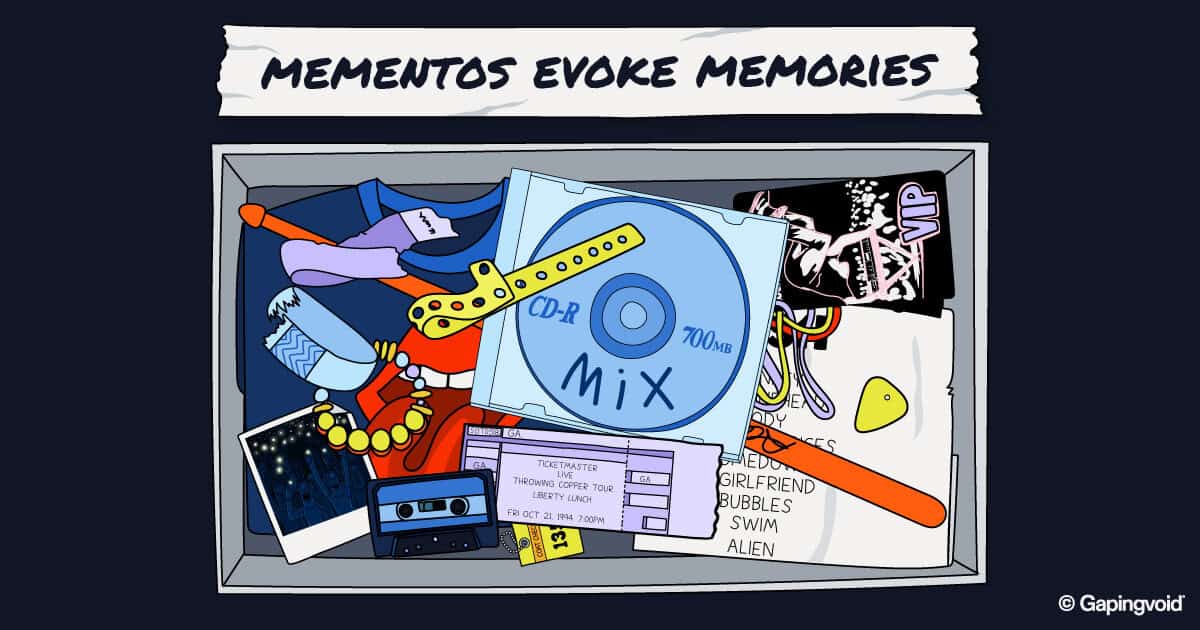
In other words, these artifacts are totemic. Their value lies in what they symbolize – what emotions, associations, and meaning they evoke – not their monetary value.
Companies and organizations do the same. It’s why the military hands out medals. It’s why Apple spends so much on design. It’s why the great advertising agency, Leo Burnett, always has a bowl of apples on their receptionists’ desks, in every single one of their offices worldwide, without fail. It’s why nations have their own flags, national anthems, and origin stories.
So don’t think of this Walmart chicken bag as just one more promo that did quite well and got a little media attention from USA Today. Think of it as something much deeper: the fact that we human beings, being a hyper-social species with the capacity for abstract thought, need symbols and artifacts to create, amplify, articulate, and share meaning and build relationships- something all groups, big or small, commercial or non-commercial, need in order to flourish long-term.
Belonging is invisible. Pride is invisible. Shared values are invisible. You can’t hold your company’s purpose in your hands. But you can hold something, like our friend the chicken bag, that encapsulates it.