Sep 7, 2026
What Are You Laboring For?
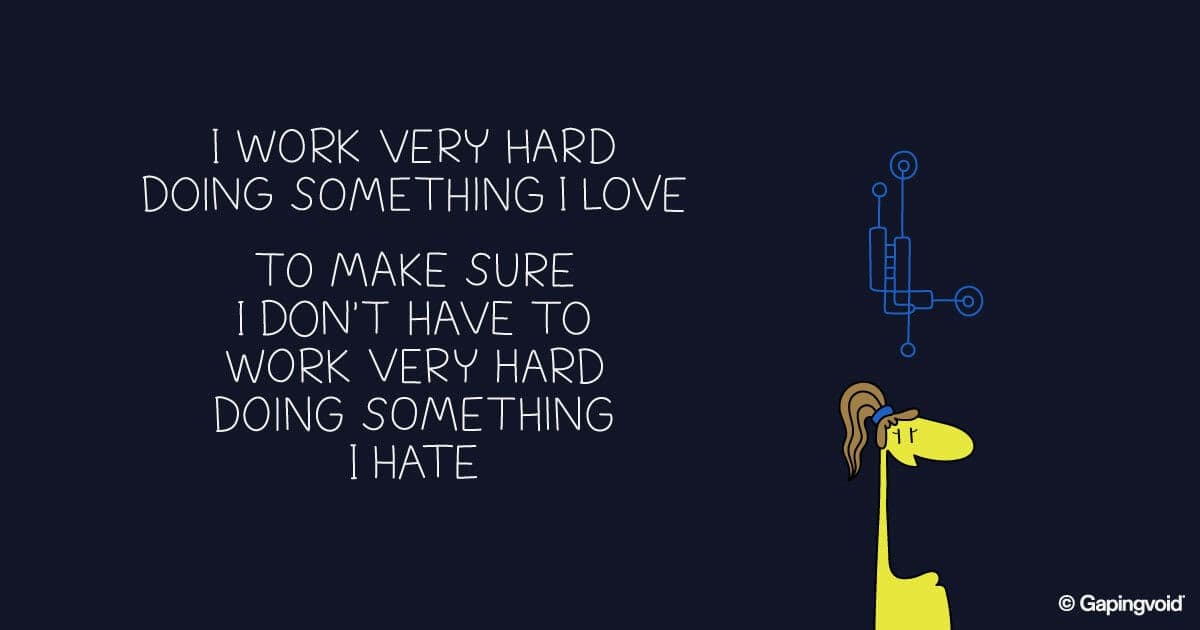
On this Labor Day, we ask ourselves a question: What does one mean by “labor,” exactly?
In the dictionary, it has two meanings:
- There’s labor as a noun (“capital, management, and labor”)
- And then labor as a verb (“to labor”)
The unions first celebrated Labor Day in New York City in 1892. President Grover Cleveland made it an official federal holiday two years later. Back then, they meant “labor” as the noun, i.e., the workers.
And it was good that the workers got recognized. They literally built the country, most often in pretty unfavorable conditions, and it’s good that everyone is reminded of that.
But here’s a counterfactual thought: What if we changed the emphasis of the word labor from worker to work?
What if instead of celebrating the person doing the job, we celebrated the job itself?
What if we celebrated the virtues that our jobs allow us to cultivate?
What if we celebrated the mission that our work allows us to complete?
What if we celebrated work not as a way of making a living but a way of making meaning?
We can already hear Eeyore saying, “Yeah, well, Mr. Fancy, it’s alright for you, with your fun job in your shiny office with a great view, but what about people with less groovy jobs, like working in factories, fast food, or installing tile?
Eeyore has a point. Funnily enough, Karl Marx had a similar one. He called it “alienation.” And it’s valid. What made 19th-century proletariat jobs unbearable wasn’t just the conditions, but the total lack of agency. At least if you had a traditional trade like a blacksmith or an agricultural worker, you had a craft. You knew your value. With these new factory jobs, you just felt like a cog in the machine.
These dreadful conditions created the Trade Union movement in the first place, and they inspired Labor Day.
The truth is, plenty of people work in shiny offices and hate their jobs, feel checked out, feel alienated. And plenty of blue-collar folk are very proud of their trade and are very engaged.
Everybody knows the saying, “It ain’t what you do, it’s the way that you do it.”
Our worldview is a bit different: “It ain’t what you do. It’s what doing it means to you.”
A job becomes more than labor when you have agency. When you’re getting better at something. When the people beside you matter. When you understand why the work matters. When you can point to something at the end of the day and say, I helped do that.
That’s what good cultures give people.
Not an escape from labor, but something worth laboring for.