Aug 19, 2026
Denormalizing Hypernormalization
Aleksandr Solzhenitsyn is attributed with describing life in the Soviet Union as follows:
“We know that they are lying, they know that they are lying, they even know that we know they are lying, we also know that they know we know they are lying too, they of course know that we certainly know they know we know they are lying too as well, but they are still lying.”
Then, in 2005, another Russian scholar, Alexei Yurchak, coined a term to describe that phenomenon: “Hypernormalization.”
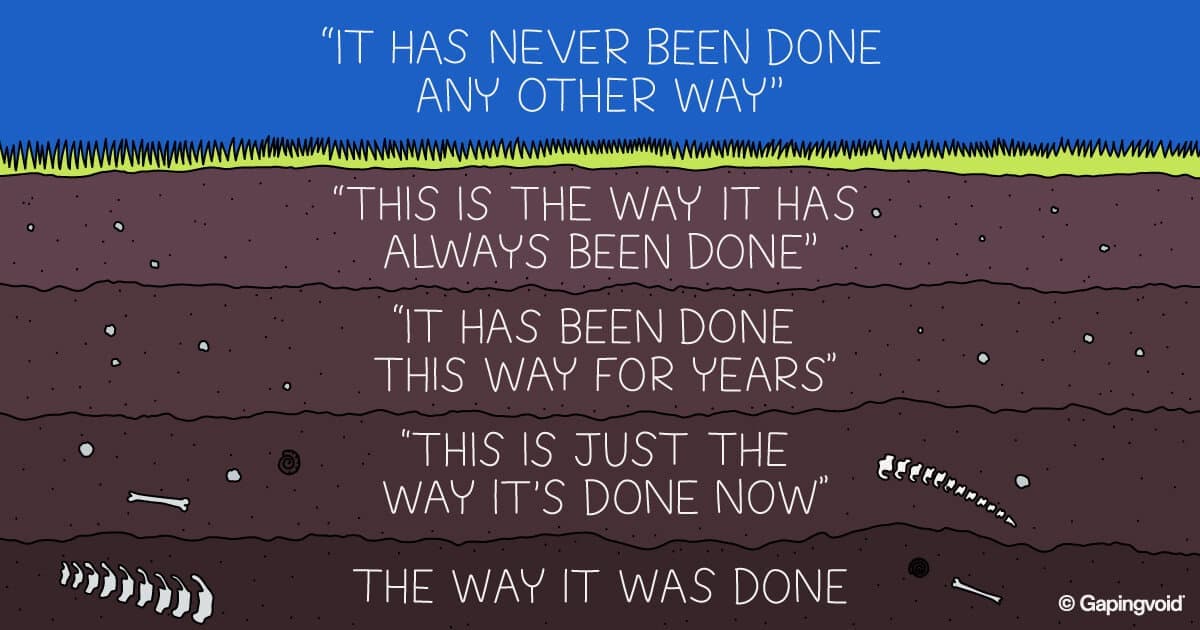
Hypernormalization is what happens when something is obviously broken, everybody knows it’s broken, and yet everybody carries on as if it isn’t. Some people can’t see what’s wrong. Others see it perfectly well but feel powerless to change it. So they shrug. They adapt. They learn to work around the dysfunction instead of confronting it. Eventually, what once seemed absurd becomes expected.
The Soviet Union endured for so long after Stalin’s death because, after living in it for so long, cut off from the rest of the world, everybody lost the ability to imagine an alternative way of life.
And of course, it’s not just the Soviets. BBC filmmaker Adam Curtis made a great documentary in which he argues that hypernormalization isn’t some freaky historical accident, but is increasingly becoming the human condition. Doomscroll for five minutes and you’ll experience it yourself – the bat-shit-crazy sentences coming out of the mouths of politicians, billionaires, celebrities, socialites, activists, influencers, etc. We’ve gotten so desensitized to the chaos that we now believe it’s normal, average, everyday behavior.
Hypernormalization intensifies the gravity that pulls so many organizations away from their original ethos – take health insurance, for example. It’s supposed to protect patients from exorbitant medical costs. But most American insurance companies only profit when they spend less on claims than they take in with premiums. A customer calls and asks why their claim was denied; the customer service representative explains that it’s standard protocol and there is nothing they can do to help. But that’s just the way health insurance works in America. And everybody goes along with it.
But does this have to be the way? In Eric Ries’ book “Incorruptible,” he shares stories of organizations that were able to protect their mission and turn a profit at the same time.
A powerful example is Devoted Health, specifically how CEO Todd Park aligned the company’s business model with its values. According to Park: “When making any decision, visualize the faces of your own family members and loved ones, then ask yourself: If this decision impacted them, what would you do? Then go do that thing, big or small.”
They reframed the business model to: they only profit if their members stay healthy. A customer called after finding toxic mold in their apartment that was undermining their medical treatment. Amanda, a Devoted customer representative, helped them find new housing. A typical health insurance company would approve or deny the claim and move on; the mold isn’t their problem. Devoted’s mission compelled Amanda to go above and beyond, to treat this customer as if they were her own family. And in doing so, she found a creative way to prevent future hospitalizations that could’ve cost Devoted $15,000 each. A win-win if there ever was one.
The customer called Amanda her “guardian angel.” No amount of fancy marketing will convince her to leave her guardian angel for another healthcare company.
When a business model clashes with its stated principles, most executives choose the business. Which makes sense; it’s their job to make as much money as possible during their reign. True visionaries take the uncharted path and force their business model to align with their core principles, creating a culture where employees are inspired to satisfy both.
Although it may be bone-crushing and soul-destroying to feel yourself drowning in hypernormalization, at the end of the day, compliance is a decision. We can decide to do it differently at any time. We can decide, like Devoted Health, to resist.
We can decide to be human beings, for a change.