Jul 31, 2026
Power Corrupts, Then Again So Does Gravity
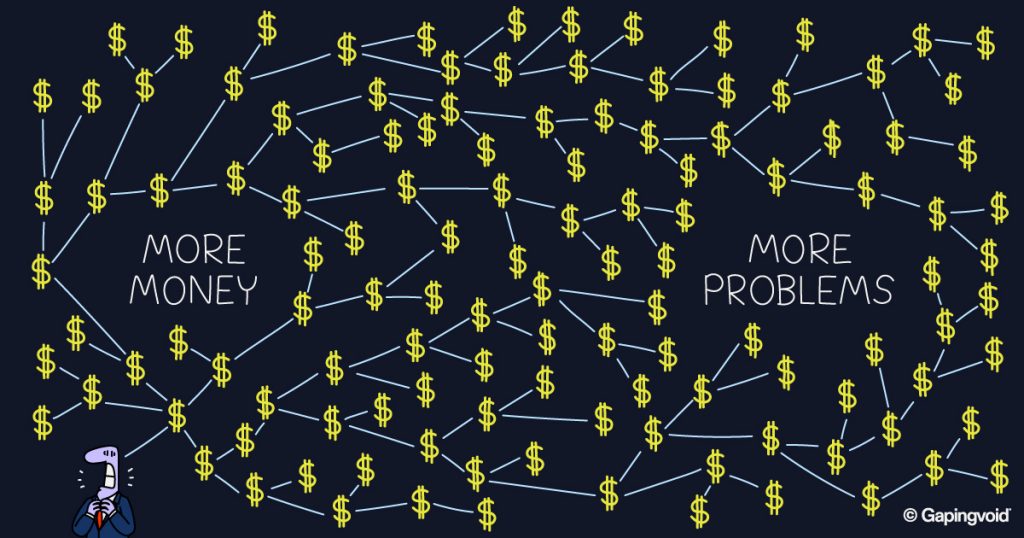
“Power corrupts, absolute power corrupts absolutely,” Lord Acton famously said.
When leaders become “corrupted,” it’s easy to blame it on “They got greedy” or “They’re scumbags.”
More often, it’s what Eric Ries calls gravity. Basically because the laws of nature force it to happen.
Ries tells the story of John Mackey, founder of Whole Foods.
Mackey wasn’t chasing yachts or private islands. By all accounts, he genuinely wanted to build a company that treated employees, customers, and investors well.
But success has gravity.
To grow Whole Foods, Mackey took outside investment. To reward those investors and create wealth for employees, he took the company public. Suddenly, the stock price wasn’t just a number. It became the retirement plans, livelihoods, and expectations of thousands of people. Every decision he made now had another constituency attached to it.
When Amazon came calling, saying “no” wasn’t about preserving Whole Foods’ independence. It meant risking shareholder value, employee retirement accounts, and potentially his own position as CEO.
Selling to Amazon wasn’t one greedy decision. It was a thousand rational ones. That’s what Ries means by gravity.
Complexity creates obligations. Obligations create constraints. And constraints eventually narrow your choices until the decision you never wanted to make starts looking like the only one left.
We tend to imagine corruption as a moral failure. Someone wakes up one morning and decides to sell out. More often, corruption arrives wearing a sensible suit.
Grow the company. Raise capital. Protect and reward employees. Increase stock price.
None of those decisions are unethical. Each one is perfectly reasonable. Together, they create a kind of gravity that can pull even principled leaders somewhere they never intended to go.
John Mackey may have been a great leader with great integrity, who walked the walk and talked the talk, but even that wasn’t enough to save him from being sucked into the unintended consequences of growth.
The way to deal with this, Ries states, is to do so in advance.
This means governance. Setting up ironclad rules ahead of time that align with your mission and protect you from predators and general bad luck.
Maybe it’s a commitment that the company can never be sold without a supermajority vote. Maybe it’s a legally binding mission that future leaders are obligated to uphold. Or a charter that requires employee representation on the board. Governance is simply deciding today what future you won’t compromise tomorrow.
One would think that’s the obvious move, but far too many CEOs don’t pay nearly enough attention. Or are cocky enough to think the law of gravity doesn’t apply to them.
As a result, many companies don’t become “corrupted” over time; their corruption is baked in from the get-go.