Tim Oren has some wonderful thoughts on the bundling and rebundling of content:
These bundling strategies are not stable of themselves, they exist only within the context of technology, distribution and transaction costs surrounding them. When these change, bundles may collapse. The CD is the obvious example. With individual digitized songs now easier to duplicate and distribute than the physical bundle, the albums raison d'etre has disappeared. As the simple playlist replaces the album's remaining value of simplifying choice, CDs commence a slow glide to oblivion, moderated only by the installed base of equipment and consumer habit.Jeff Jarvis has some nice thoughts to add:
My two cents: A friend of mine just got laid off from his high-paying editorial job at FHM. He's 37. His bosses figured they could get a 26 year old to do the job a lot cheaper. They were right, of course.If the network or the newspaper or the magazine or the cable system was the old bundle, the internet itself is the new bundle: In this medium of extreme control, we each put together whatever bundle we want...
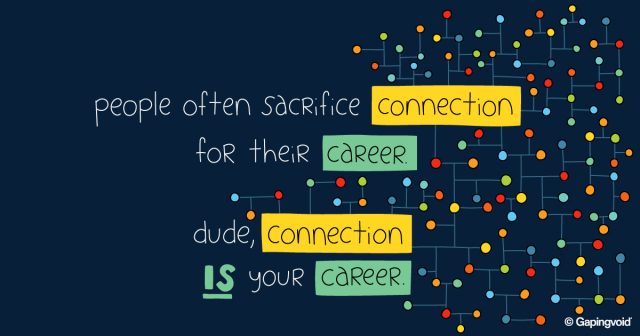
This accelerates the commoditization of content. It also provides opportunities for those who can add value (and convenience and perspective and even fun)... In this new distributed, unbundled, post-marketplace, molecular, commoditized media world, value can be added in many ways. It's about relationships. It's about relevancy. It's about service. It's about uniqueness. It's about perspective.
Every non-executive media, publishing and advertising person I know is hurting. But I don't expect the pain levels to ever decrease, for reasons Tim and Jeff talked about.
Even worse, a lot of these folk live in "media center" cities like New York or London that, unlike the prices they command for their services, never get cheaper.
i.e. their jobs are worth less and less every day, the towns they live in get more and more expensive to live in every day. It's unsustainable.
We media/advertising/content folk are supposed to be "creative". Yet we're very uncreative when it comes to thinking about our business models differently. We still expect management to take care of that aspect for us, in exchange for allowing our "creativity" to be squeezed like lemons. Management knows we're screwed, knows we're stuck, knows we're desperate, so they squeeze harder. I would do the same. So would you.
Like I said in "How To Be Creative", all existing business models are wrong. Find a new one.
Posted by hugh macleod at September 18, 2004 10:30 AM | TrackBackand what would a new business model look like? Freelancing? Working from home to cut the cost of offices?
Posted by: m at September 18, 2004 11:17 AMFreelancing and working from home doesn't make you less cheap and exploitable.
In fact, I would say exactly the opposite.
Posted by: hugh macleod at September 18, 2004 11:45 AMI'm making twice as much as a free agent as I did at my last job.
Freelancing works, *if* you can show how you add value compared to all the other people out there trying to do the same thing. Freelancing works, if (and only if) you can do excellent work every time out. If you go into it saying, "hire me because I have low overhead and I'm cheap," you're doomed.
Posted by: Katherine at September 18, 2004 1:28 PMNew opportunities are always presenting themselves in terms of developing business models, but you have to be on the lookout for these opportunities, and quick and creative in adapting. I've heard it likened to jumping out of an airplane and designing/building a parachute on the way down.
Posted by: boo at September 18, 2004 2:28 PM"It's about relationships. It's about relevancy. It's about service. It's about uniqueness. It's about perspective". Gee, what if that relationship, that relevance and perspective could be bundled together in a convenient-to-read, portable format that had the added benefit of offering you things that fitted those criteria, but which you hand't thought about and therefore sought out. If there was someone - let's call them an "editor" - who understands your possible mind-sets had thought up those sort of things and understood you and people like you, that could just work.
OK, so I happen to agree that the magazine may be rendered obsolete eventually. And as a mid-thirties magazine person, I'll be obsolete long before magazines. But while you're gazing at the horizon, I'm happy to give my readers what they want in a format in which they want it for at least a couple more years yet...
Posted by: Richard at September 20, 2004 11:43 AMDepends on the magazine, Richard, of course. I'm glad the biz is working for you.
I just don't consider "working at the sharp end of fragmenting media" the definition of fun.
Posted by: hugh macleod at September 20, 2004 2:47 PM