Jul 23, 2026
Yesterday +1
Kodak engineers invented the digital camera in 1975.
The executive team said meh. Digital is cool, sure, but cameras are analog. Everyone knows that.
So, they pushed for better film, better printing quality, better mechanics. They anticipated a future that would be the past, but better.
Yesterday +1.
Meanwhile, Canon and Sony were busy turning the calendar to Day One of a new paradigm. BAM.
You know this story. You probably know these too:
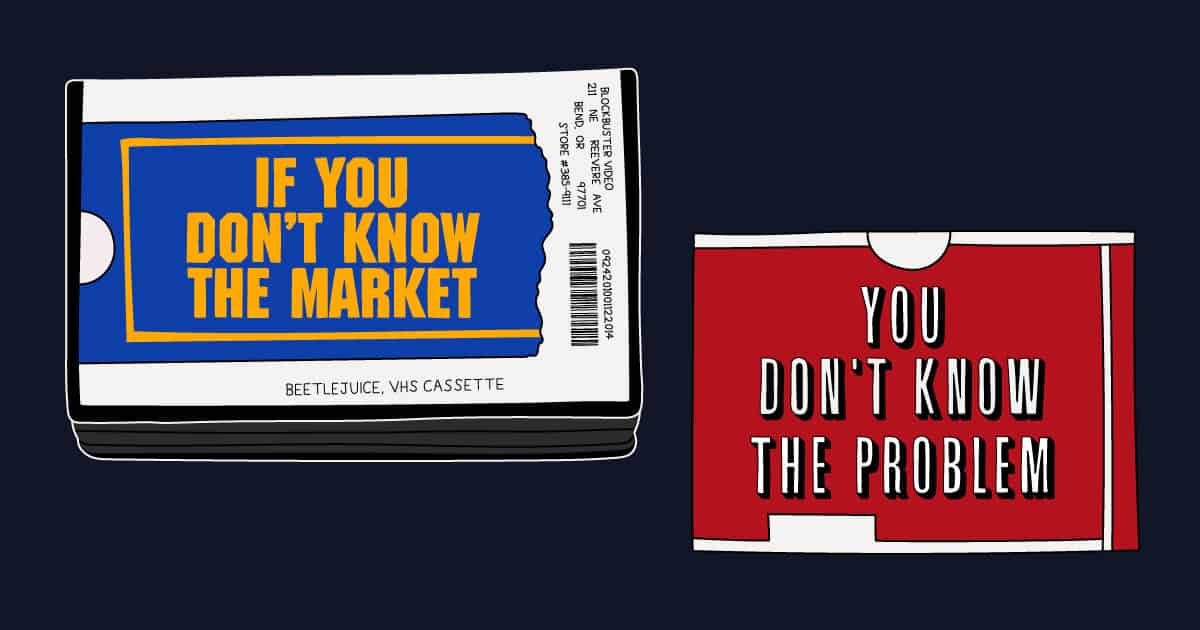
Netflix didn’t beat Blockbuster by shipping rentals marginally faster, but by rendering the entire preexisting model unnecessary.
Amazon didn’t beat Barnes & Noble by planting bookstores in 15% more locations with broader selections, but by rendering location irrelevant and selection infinite.
ChatGPT and Claude aren’t taking bites out of Google’s traffic volume by surfacing the right links faster, but by rendering URLs obsolete.
The future is not an updated past.
Tomorrow is far more unpredictable than just a shinier version of yesterday.
If it’s a new paradigm, it hasn’t been done before, there’s no repeatable playbook. There’s no data on what does not yet exist, no neat slide deck, no confidence-boosting report.
Just uncertainty, fear, and the very real risk of failure. Lots and lots of “not knowing.”
And we dislike not knowing. As our long-time pal, Rory Sutherland, likes to say, “Nobody ever got fired for buying IBM.” But you might get fired for pushing the edge too far. Or so we tell ourselves while we stay firmly rooted in place.
Yesterday +1 is much easier. It’s safe. Just figure out how to do the same old thing, only slightly better.
Resetting the clock, clearing the chessboard. That takes guts, grit, a fair amount of irrational self-belief and ramen noodle dinners.
As Steve Jobs said in that famous 1997 TV ad, “The people who are crazy enough to think they can change the world are the ones that do.” Note how in that entire commercial, one of the most famous and acclaimed of the last three decades, he made no mention of “the data.”
The world doesn’t like crazy of course. It much prefers shinier versions of Yesterday’s news, along with a spreadsheet forecast.
So the shinier people talk a big game, maybe post some buzzword-infested pablum onto LinkedIn, and await more data.
The crazy people carry on being crazy.
Sometimes they win.
And the data on them won’t exist until they do.