May 11, 2026
When In Doubt, Swim Upstream.
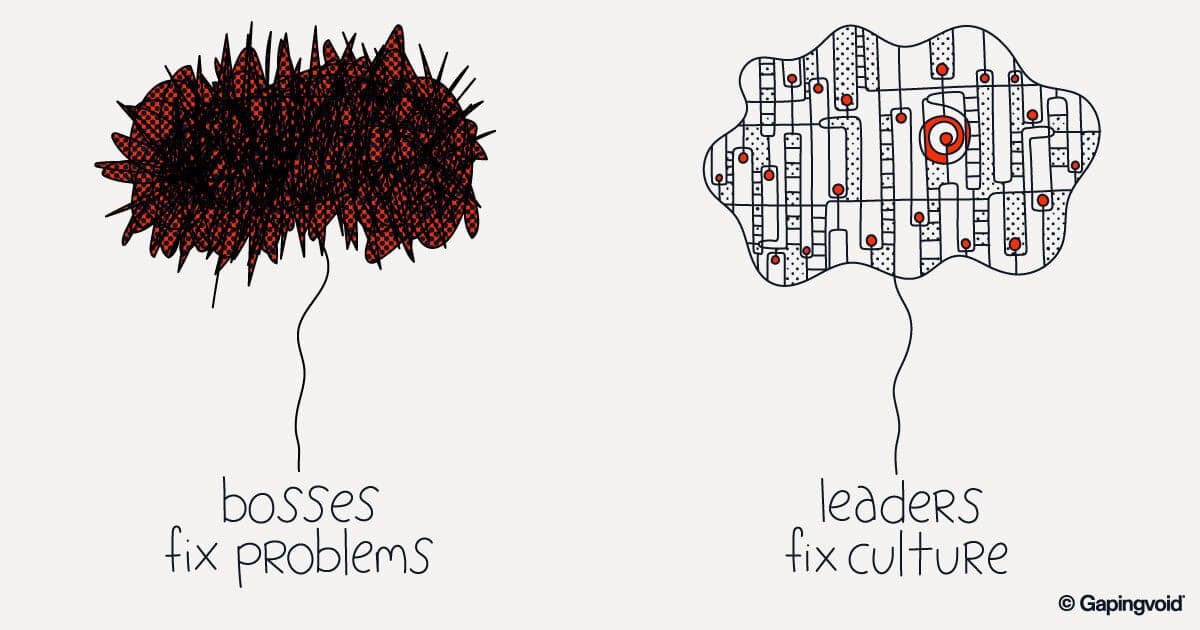
The conservative publisher, the late Andrew Breitbart had a famous phrase, “Politics is downstream from culture,” i.e. politics change because the culture changes, not vice versa. Political change happens after the fact.
This idea wasn’t exclusive to conservatives. The 1930s communist, Antonio Gramsci (thought to be the father of Cultural Marxism), advocated for the idea of achieving the Revolution not by storming the barricades, not by the workers seizing the land and factories, but by gaining control of the media, the arts, and the academics.
Study human behavior long enough, and you start to realize that it’s not just that culture is upstream from politics, it’s pretty much upstream of EVERYTHING.
Take business: After World War II, Japan’s manufacturing industry was a hot mess (for obvious reasons). Production was inconsistent, quality control was limited, output was low, and cost per unit was high.
Most people assumed it was a technology issue. Not enough machines, not enough spare parts, logistics, or energy imports.
In the end, it took a systems thinker (an American brought in by the Allies after 1945 to help rebuild the country) named W. Edwards Deming to realize the problem wasn’t the machines, but the people running them.
He didn’t focus on building better production systems at Toyota (where he consulted). He fixed the principles underneath them.
Principles like Kaizen (continuous improvement), psychological safety, frontline empowerment, and good ol’fashioned pride of workmanship.
Once the industry adopted these principles, it gradually morphed into the manufacturing powerhouse we know and love today. The rest is history. What Deming was so keen to realize is that quality could never be pursued directly. If the right conditions were created, quality would fall out naturally as a byproduct.
The same thing is happening at Anthropic.
Its CEO, Dario Amodei, said that he spends roughly 40% of his time on culture.
In other words, the CEO of one of the most important companies on earth spends almost half his job on the stuff most executives delegate to HR.
And how does he spend that 40%? By building a place where people are expected to argue with him. “It’s encouraged to go to leadership and disagree with them, challenge them publicly,” Anthropic’s head of growth, Amol Avasare, said on a podcast. “I think that just leads to a level of trust.”
As he put it, the goal is “to get a reputation of telling the company the truth about what’s happening, to call things what they are, to acknowledge problems…”
There’s no mention of AI in that. Because if you have a company of people who call it like it is, and aren’t fearful of highlighting issues, great AI will naturally fall out (all other things like tech competence being equal, that is).
But if you have all tech competence and no candor, forget it.
This is what a lot of us miss, whether we’re selling tech, or selling baked beans or office furniture. We all want the Anthropic culture without paying the Anthropic price. We want the candor on the values page, but not on the Zoom meeting. We want the optimized output without building the indirect human stuff that produces it.
The best leaders don’t just build better systems, they go up a level.
They stop chasing the outcome and build the environment that produces it.
They go upstream.
They do what French writer and aviator Antoine de Saint-Exupéry encouraged leaders to do: “If you want to build a ship, don’t drum up the men to gather wood, divide the work, and give orders. Instead, teach them to yearn for the vast and endless sea.”