Oct 30, 2026
The Paradox of Progress
It’s easy for humans to fixate on problems. There’s a strong case to be made that negativity is our natural tendency.
Evolution sculpted our brains over millions of years, and unfortunately didn’t optimize them for satisfaction, well-being, or happiness. It optimized them to help us survive. Of course, satisfaction and survival are not mutually exclusive. But when satisfaction might make us complacent, our brains see dissatisfaction as a potentially life-saving cure.
Think of it this way: if a hunter-gatherer were truly satisfied with what he had, he would probably die much sooner.
So, even though gratitude might grant us peace of mind, we’re wired to fixate on problems. Even though noticing what’s right might make us feel better, we’re wired to point out what’s wrong.
Against this backdrop, it makes sense that even the best companies still get complaints. But why have customer complaints risen in recent years?
Biological evolution can’t explain that. But cultural evolution can.
When things change, norms follow. When Amazon suddenly lets us order almost anything we want and have it show up on our doorsteps in two days, that becomes the new normal. If it arrives in three days, that seems abnormal.
If, for any reason, a product or service that’s usually miraculous becomes momentarily less miraculous by a small margin, it’s all too easy to feel robbed of the excellence we think we’re entitled to.
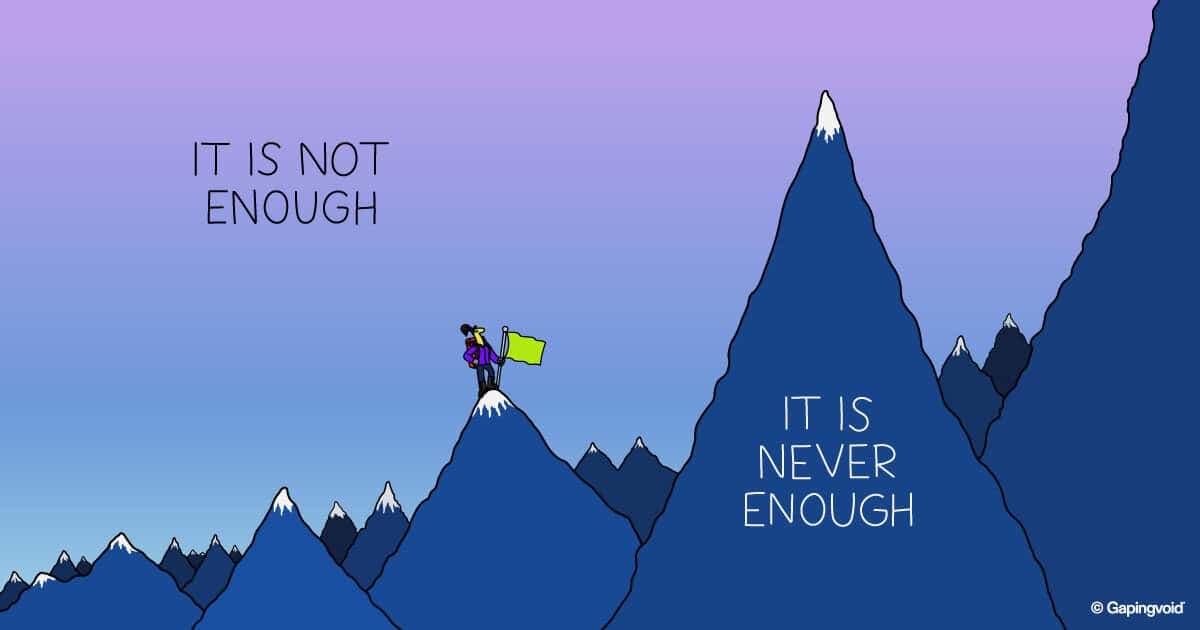
The better things get, the easier it is to feel wronged when they fall short.
And therein lies a rather frustrating paradox for business leaders: The better you get at delighting your customers, the harder they become to delight.
Yesterday’s miracle becomes today’s minimum requirement. The extraordinary service you once received a standing ovation for is now the thing customers threaten to leave you for if you don’t deliver it.
So what’s a leader to do? Stop raising the bar? Of course not.
But recognize that every time you raise it, you’re making a new promise to your customers. And as customers become harder to impress, the moments when things go wrong become increasingly important opportunities to distinguish yourself.
Does the employee shrug and blame the shipping company? Or do they recognize that, regardless of whose fault it was, there’s a disappointed human being on the other end who needs their help?
When perfection becomes the expectation, how you handle imperfection becomes your competitive advantage.