Aug 17, 2026
The First Tool Humans Ever Built
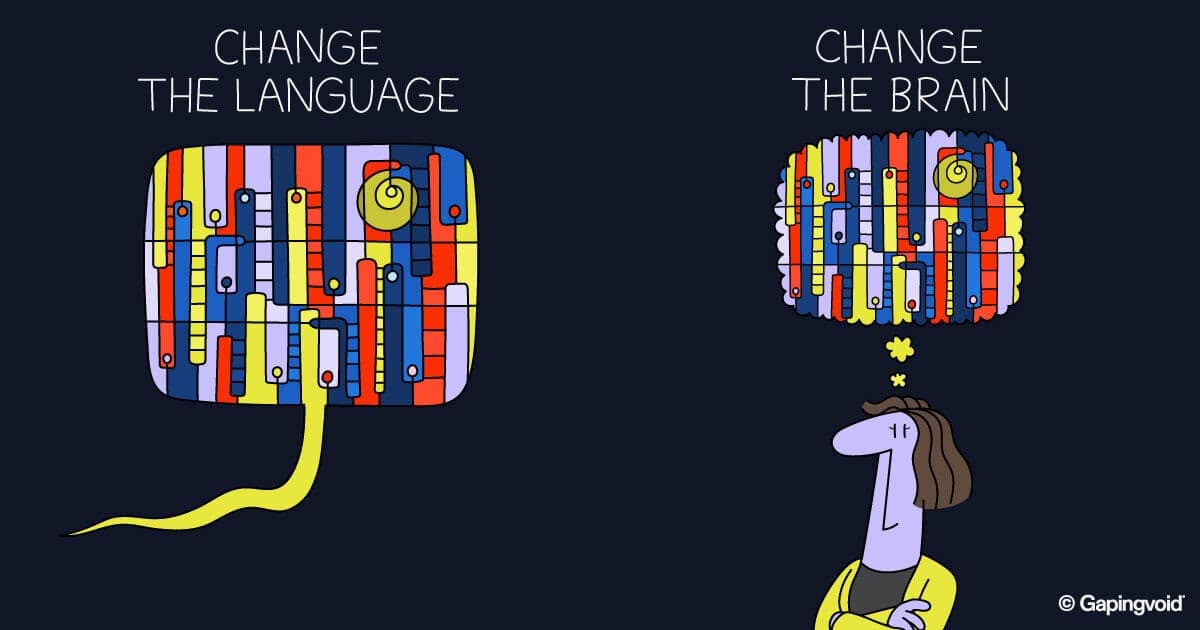
Long before we built cities, we built sentences.
For decades, scientists believed language lived in the parts of the brain responsible for comprehension and memory, largely separate from the systems that kept us alive.
However, researchers at Virginia Tech discovered that emotionally charged words activated neural circuits involved in one of biology’s oldest functions: approach or avoid.
The same machinery that once helped our ancestors distinguish food from poison now helps us distinguish hope from despair, purpose from apathy.
Which makes perfect sense. We no longer survive by outrunning predators. We survive by coordinating with other people.
Every empire, religion, nation, movement, and company was forged on ideas before it was forged from stone. Words tell us what matters. Who belongs, who doesn’t. What is sacred, what is forbidden.
The best leaders understand this intuitively. They don’t simply explain objectives; they construct worlds.
There are mountains worth climbing. Swamps worth avoiding. Roads worth taking.
People begin orienting themselves inside that landscape because, suddenly, someone helped them see it.
This is why weak leadership language always feels so…forgettable.
“We strive to deliver innovative customer-centric solutions.”
Your brain doesn’t know where to go. It doesn’t know what to approach or what to avoid.
Strong language gives people coordinates:
“Put the customer first.”
“Measure twice. Cut once.”
“People like us do things like this.”
Despite being incredibly simple phrases, they tell people exactly how to navigate. And that has ripple effects that spread throughout the entire community.
The language becomes shorthand.
The shorthand becomes habit.
The habits become identity.
Eventually, nobody remembers where the phrases came from; it simply becomes “how we do things around here.”
That’s culture.
Every leader is already shaping a culture with language. The question is, are you choosing the right vocabulary?