Aug 24, 2026
It’s What Happens Around The Coffee Cup That’s Interesting
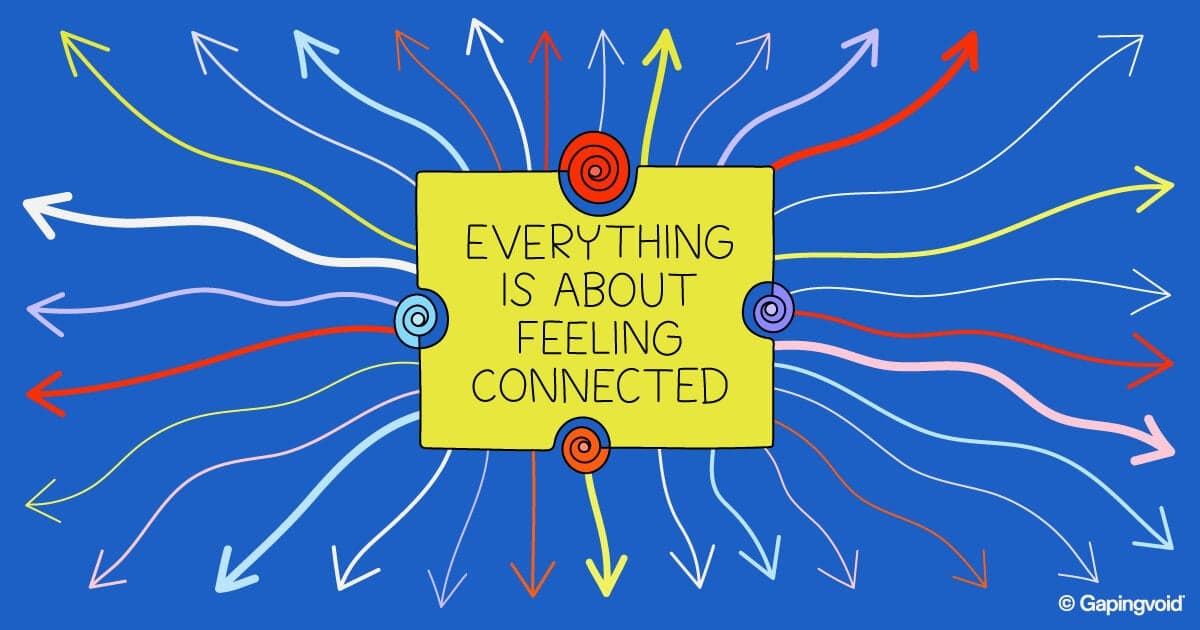
Joe Boxer, the company best known for its fun and stylish underwear, once made a sharp, insightful observation about their retail: “Our stores are museums, our products are the souvenirs.”
Very meta, right? Then again, all brands, all symbols are like this.
A brand isn’t a set of services. Nor is it a product catalog. A brand is an idea. An attitude. A worldview.
How about a Temple? Museum? Movement? Stage? Platform? Performance Art?
Attach a brand to something, and you give it new meaning.
Clothing retailers Uniqlo, Coach, and Ralph Lauren have opened cafes. Capital One too. LVMH has a Dior cafe in Dallas and a Louis Vuitton cafe in New York. There’s also Tiffany’s Blue Box Cafe. Prada has some in London, Singapore, and, according to rumor, New York soon. Let’s not forget Barnes and Noble and Target, which have long partnered with Starbucks.
Why are these companies doing this? Let’s hear it directly from their executives…
- Nico Cessot, Uniqlo head of marketing, said the point is to help customers “be part of the brand, to feel the brand.”
- Coach executive Marcus Sanders said it’s about enabling people to “experience their favorite brands in a different way.”
- Jennifer Windbeck, Capital One’s head of retail bank channels, said, “bank accounts, credit cards and money are things that don’t always feel tangible. And so the cafes can show up as a personification of what is Capital One.”
As Joe Pine, author of the Experience Economy, put it, “It’s not just about the coffee, it’s about immersing you in the brand values, in the brand colors, in what it stands for.”
The way we see it, it’s all an exercise in attention generation, the holy grail of all businesses. Attention isn’t simply the currency of social networks, but at the core of every successful leader.
See the pattern?
The brand is an idea – that’s all well and good – but the idea takes on new power when it is “experienced” and “felt.” All of these tactics lead to greater attention on the brand and therefore its leader.
The idea gives meaning to the physical artifacts. The physical artifacts give form to the idea.
To be clear, this doesn’t just apply to clothes or financial products. It matters for anyone who wants to spread any idea.
Great leaders make their ideas visible, tangible, and undeniable. Not just something you think about, but something you can actually feel and see.
Only then do those ideas catch and spread; only then do people want to bring home the souvenir.