Aug 28, 2026
In Defense Of Vertical Drinking
Ask a Brit what they miss most when they spend time abroad, and nine times out of ten the answer is “The pub.”
With our founding team members having spent decades in the UK, we feel qualified to confirm that. The traditional pub is Britain’s most resilient institution. It has outlasted a fair few kings and at least one church.
Pub culture goes back centuries. There’s no official queue at the bar, and yet everyone knows who is next in line to order. The stools? Don’t even think about it if you’re not the owner, manager, or a regular. Two people sit at a four-top, and someone will join them without permission. And as everyone knows, the further you move away from the bar, the more you can get away with (snogging, gambling, insert other debaucherous act). The Spectator covered all this rather beautifully last month.
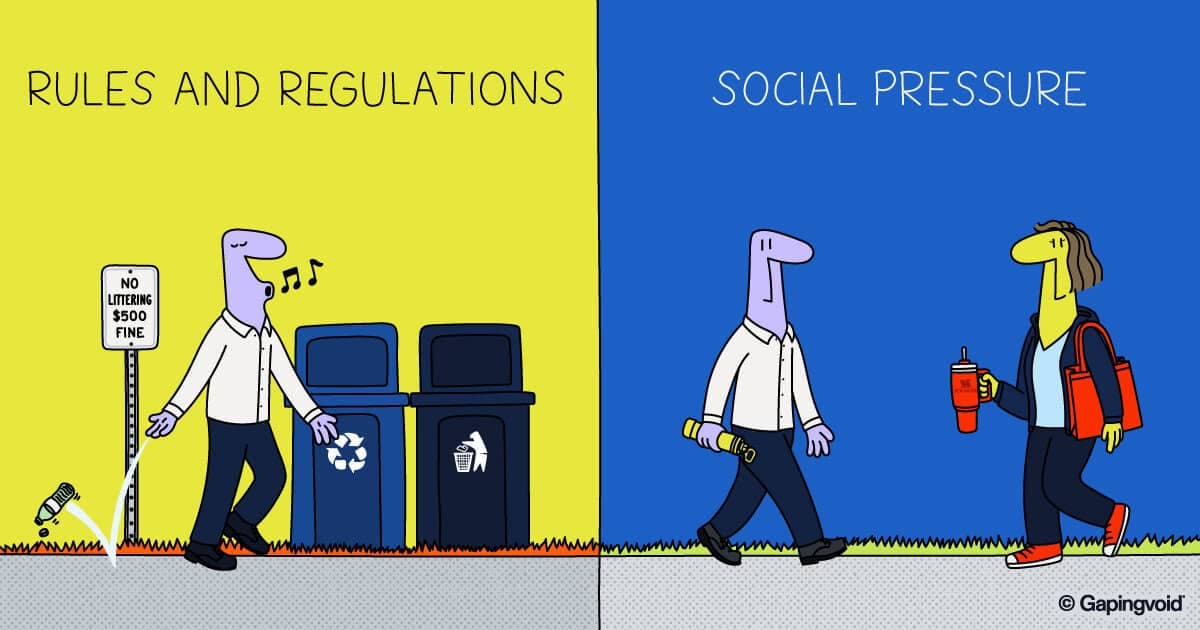
None of this is written down. There’s no law inscribed somewhere, no official rules framed next to the register. If you break a rule, nobody will fine you; the scowl you receive is enough. It’s an ecosystem of custom, mores, and rituals that’s run without interruption for hundreds of years.
Until recently…
The Westminster Council drafted a new licensing policy that favors pubs with more seats, more table service, and less of what they call “vertical drinking.” To the average Brit, this sounds less like a pub and more like a restaurant that doesn’t serve food. Innit?
The country interpreted that as a ban on standing in pubs, and the Council then spent the next week insisting it never said anything like that. A written rule was questioned as soon as it met an unwritten one.
This is the power of culture in our institutions, whether it’s the local pub or the Fortune 500. A set of unwritten rules governs how your team behaves. Are they serving you? Lucky you. If they aren’t, rewrite them. Just not the way the Council did.
The anthropologist Clifford Geertz had some nice thinking about this. He said culture doesn’t live in someone’s head; it lives in the spaces between people. His famous example was a wink. On film, a wink and a twitch look identical. What makes it a wink is that everyone in the room knows it’s one.
The scowl at the queue jumper is the equivalent of a wink in this instance. Westminster Council tried to legislate one, but you can’t. There’s never been a law needed for a queue at the bar. Somebody just stood in the right spot. Someone else noticed, and three hundred years later everybody knows bar etiquette instinctively.
Our teams work in much the same way. Every unwritten rule that governs the organization was written based on what people did (especially leadership) and by what they didn’t. By the gap or lack thereof between what gets said and what gets done. The pub never needed bylaws. It had regulars.
So do you. You just have to be one.