Jun 23, 2026
Don’t Be ‘Normal Spongebob’
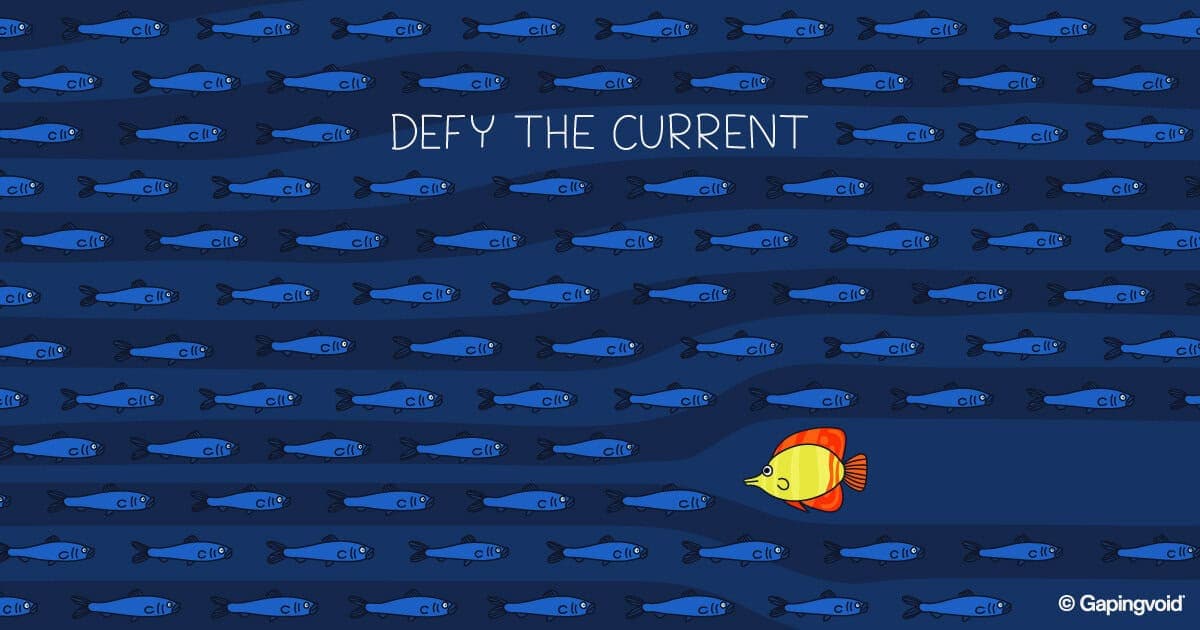
In the brilliant and highly esteemed television program “SpongeBob SquarePants,” we get a thrilling glimpse into the lives of a cadre of charming oceanic critters.
The star, of course, is SpongeBob himself. An iconic, exuberant, and deeply strange little sea sponge. He’s a bit of an odd ball:
- He’s a competitive jellyfisher.
- He bursts into song when he’s excited and explodes into obnoxious laughter at inappropriate moments.
- He’s obsessed with bubbles.
- And he keeps a pet snail, Gary.
His joy drives his neighbor, Squidward, up the wall. Squidward is neat. Urbane. Sophisticated. Miserable.
In one episode, Squidward finally snaps and begs SpongeBob to be more… normal.
SpongeBob can’t stand letting anyone down, least of all Squidward. So he orders a self-help video, “Journey into Normality,” and gets to work.
His voice flattens out. His sparkle goes gray. His unique and excitable conversation style turns bland:
“Hi, how are ya?”
“Wonderful weather we’re having.”
“Okay, see you around.”
He quits cooking and moves into a cubicle, printing pictures of Krabby Patties to hand the customers. Then, most alarmingly of all, he morphs from square to oval. His edges sanded right off.
You can guess how that goes.
The question the episode hangs on: can SpongeBob get his edge back, or is he stuck like this, smooth and sad, forever?
Plenty of companies, brands, and movements go through the same arc and face the same question.
There’s the young, idealistic political candidate with an uncompromising vision who is a complete fireball for her cause. She wins. Then legislative leaders sit her down and tell her how the system really works. Before she knows it, by a thousand invisible concessions, she’s turned into Normal SpongeBob.
There’s the startup that roasts its whole sleepy industry. Then comes the investor meeting. The board worries the branding is too sharp for the older crowd. Wouldn’t hurt to take the heat down a notch, the founders figure. So they do. And they keep doing it, decision by decision, until they look like everyone else they used to mock. Invisible.
This spring, an Ashley Furniture associate in Memphis named Stef started filming freestyle raps inside the store, in uniform, telling people to come buy a couch. Nobody asked him to. The videos hit millions of views. For about a week, a furniture chain was the most interesting thing on the internet.
Corporate told him to take them down. He refused. They fired him.
The problem is corporate decisions like this lead to one place: bland land, the place companies go to die.
So what are you to do? Let’s go back to SpongeBob.
In his round predicament, he does everything to re-weird himself. Slides through town in his underwear, jellyfishes, claws back one freckle at a time. It almost takes, until it doesn’t, and he snaps back to permanently smooth and starts to cry.
Then the doorbell rings. It’s Squidward. The one who wanted normal in the first place. Round head, dead eyes, pants. He stands in the doorway, sanded down to nothing.
The sight of it, normal on somebody else, up close, is so horrifying that it snaps SpongeBob straight back into himself. Buck teeth, holes, laughter, the whole package.
The trouble is the market that asks you to file down your edges to “fit in” gets bored the second you obey. The version of you the board signed off on is the one nobody misses.
SpongeBob worked it out for himself. Sadly none of the rest of us will get a Squidward at our doors. So look hard at the smooth ones, and don’t let them round your edges.