Nov 11, 2026
Culture Keeps Power in Check
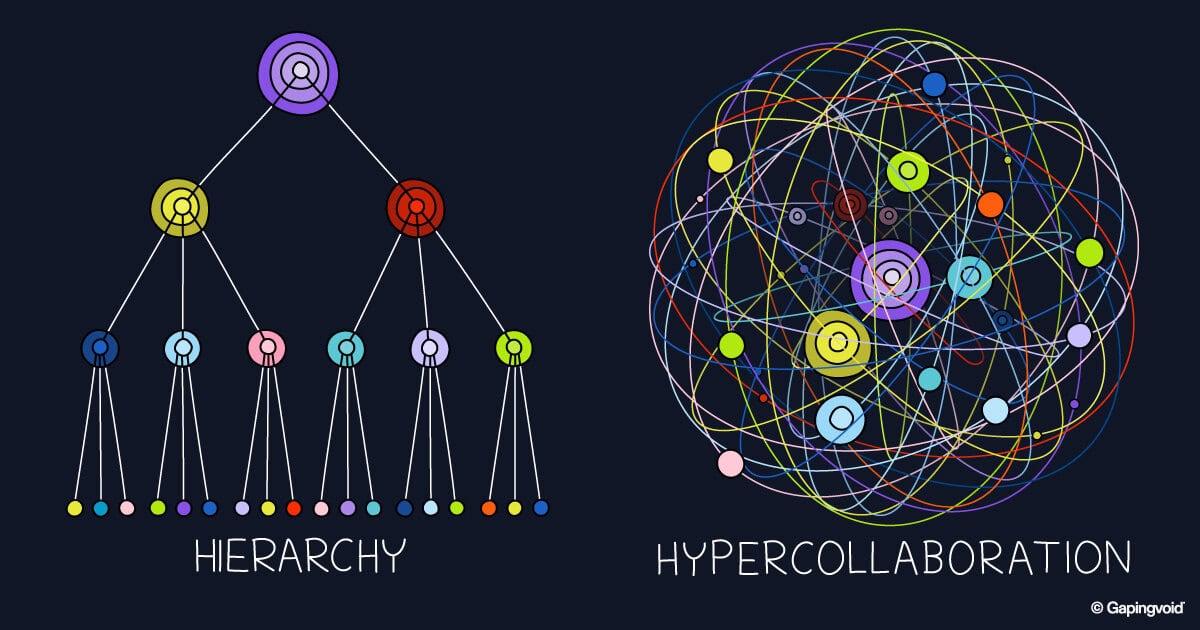
Did you know that Netflix has two CEOs?
It seems to be working out well. Greg Peters, one of those CEOs, told The Verge that he considers having two CEOs an “incredibly powerful model” that strengthens the company’s transparent culture and willingness “to have honest conversations, to be selfless, [and] to put the company first.”
It’s a nice idea. But there’s a reason most companies only have one CEO. And it goes back to the Third Century AD.
When he became emperor, Diocletian concluded that the Roman Empire was too damn big for one emperor to manage. So in 293 AD, he split the empire into 4 parts, known as the Tetrarchy. It had two senior emperors and two junior emperors. When one of the senior emperors died or stepped down, one of the junior emperors would fill his place.
It worked really well… for the first five minutes. What, of course, happened was that one of the four would inevitably wonder: why should he share his empire with three others when it would be much more fun to rule it all by himself?
Civil war broke out between the Tetrarchy, sending the empire into chaos. This lasted until 312 AD, at the Battle of the Milvian Bridge, when Constantine the Great consolidated power, killed off his rivals, and ruled the empire solo.
Building a stable system of leadership – of the Roman Empire or of a company – requires balancing two things: 1) a strong leader, and 2) checks and balances on said leader.
As Founding Father Alexander Hamilton wrote in Federalist No. 70, a singular leader is more capable of “decision, activity, secrecy, and despatch” than two leaders. Further, he argued, “unity may be destroyed… by vesting the power in two or more magistrates of equal dignity and authority” because “wherever two or more persons are engaged in any common enterprise or pursuit, there is always danger of difference of opinion… personal emulation and even animosity,” which “lessen the respectability, weaken the authority, and distract the plans and operation of those whom they divide.”
But as Netflix proved, equilibrium can indeed be achieved.
All it takes is a culture with a collective purpose so strong that it counteracts selfish ambition (providing checks and balances) and makes two people work with as much unity and decisiveness as one (putting Hamilton’s fears to rest).
It’s difficult, it’s rare, but it’s certainly possible, and it seems to be the story of Netflix and now Spotify … at least for the time being.
All this begs the question: If culture can overcome the same psychological forces that split apart the Roman Empire, and if culture can resolve the dilemmas the Founding Fathers grappled with…
…what else is culture capable of?