Robert Trivers died last week, perhaps the greatest evolutionary biologist of the last century. Though not as famous as his colleague, Richard Dawkins, he did write the introduction to the “The Selfish Gene”, which speaks for itself.
If you haven’t heard of him, that’s partly his own fault. He spent decades being right about things people weren’t ready to hear.
Starting in the early 1970s, Trivers knocked a string of ideas out of the park in rapid succession. Parental Investment Theory, Parental Offspring Conflict Theory, and Self Deception Theory.
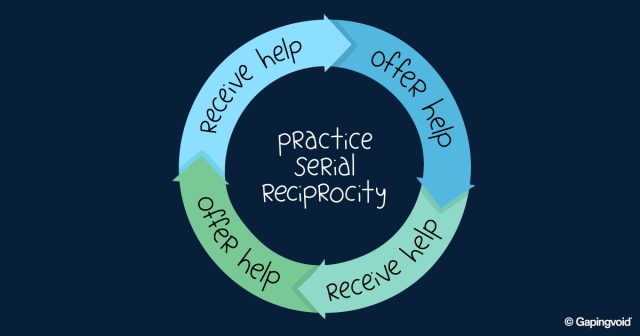
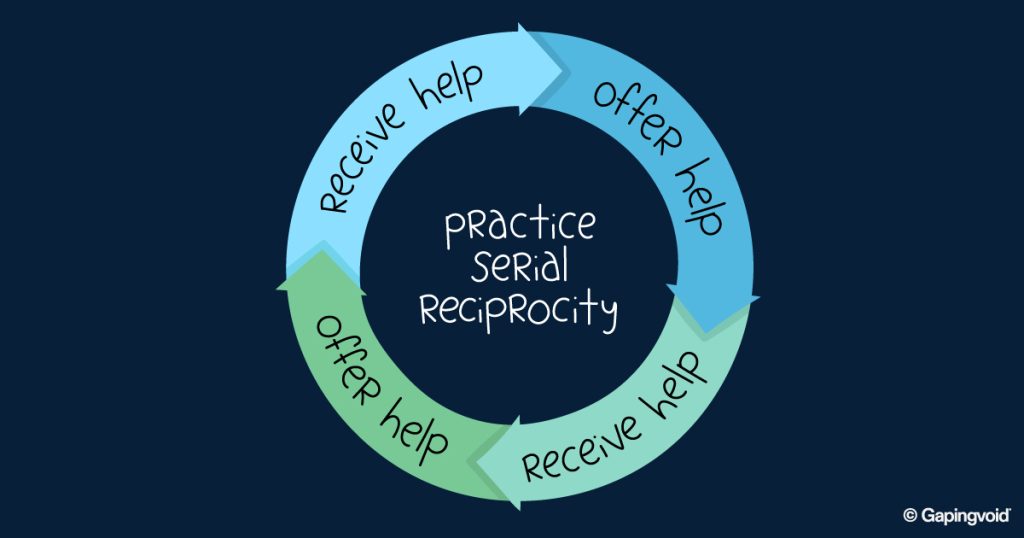
But his big idea, at least to us, is his Theory of Reciprocal Altruism. In his 1971 paper, “The Evolution of Reciprocal Altruism,” Trivers explained the “I’ll scratch your back if you scratch mine” dynamic.
When we do something generous, it’s not because we’re saints. It’s because somewhere in our animal brain, we expect the favor returned. By us, to them. By someone, eventually, to someone else. The reason we do it is simple. It builds social trust. And high-trust populations are happier, more productive, and a lot easier to sleep in at night.
And don’t forget, businesses and organizations are “populations” too, not just towns and nation states. Reciprocal Altruism permeates all levels of any group, up and down hierarchy. Loyalty for a leader or a colleague is only as good as how much he/she unilaterally has their back, and vice versa. Nobody goes the extra mile for somebody who doesn’t, hierarchy is irrelevant..
Of course, any good leader knows this already. What’s harder to explain is how long it takes the bad ones to figure it out.
Notice how his theory differs from “Effective Altruism,” an idea first made popular by William MacAskill that was quite fashionable among the billionaire class not too long ago, until its reputation was smeared by the sudden downfall of one of its most high-profile enthusiasts, the crypto-fraudster, Sam Bankman-Fried.
Reciprocal Altruism is just how we are, how we’re programmed. Trivers discovered something much older than leadership. The impulse to have someone’s back and the expectation that they’ll have yours is baked into the species. It predates money, hierarchy, org charts, and performance reviews by about two hundred years. Which means when a leader creates a culture where people don’t feel that, they’re working against human nature itself. Good luck with that.
You can’t demand it. You can’t buy it. You can only earn it the old-fashioned way. One scratch at a time.