In 1871, George Eliot (real name Mary Ann Davis) published “Middlemarch” an 800-page masterpiece about a young woman whose grand plans all fell apart.
It’s one of those rare books where nearly every sentence lands like a punch to the gut. A staggering display of literary mastery and magic.
And yet, the story itself is simpler than you’d expect.
Dorothea Brooke is an ambitious, idealistic young lady with a moderate inherited fortune behind her, who has high ideals and big plans on how to use her money to make the world a better place. Housing for the poor. Funding scientific breakthroughs. Ambitious reforms that would matter.
But of course, “The best laid plans of mice and men often go awry,” and Dorothea was no different.
In the end, for all sorts of reasons, none of her big schemes take off.
And yet, somehow, in spite of her thwarted ambitions, she ends up having profoundly positive effects on many people, as if almost by accident.
A conversation that changed someone’s trajectory. A gesture that kept a stranger going. Influence that accumulated without announcement.
In the end, Dorothea ended up mattering profoundly, just not in the ways she’d imagined. It almost sneaks up on her, quietly, modestly.
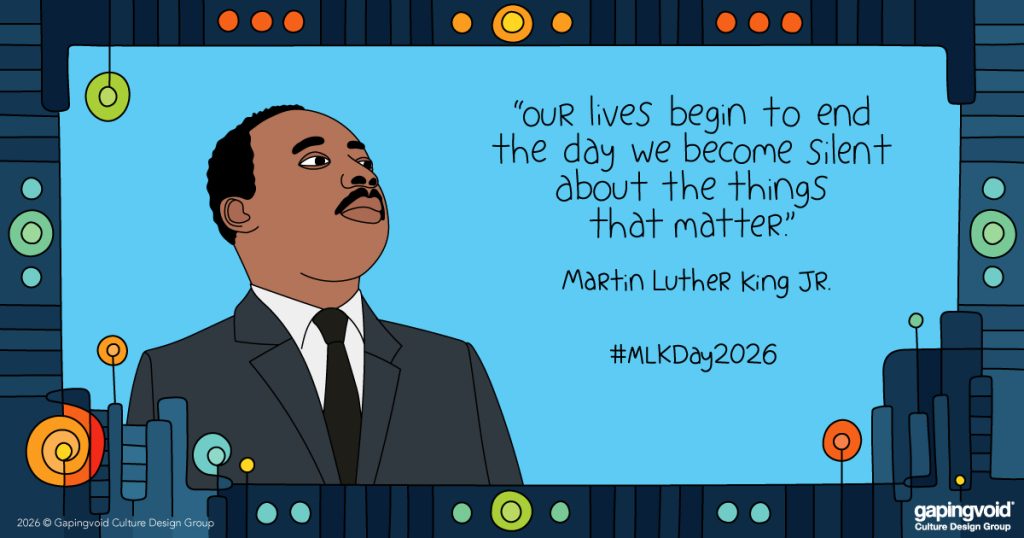
Today we remember the great man, Martin Luther King Jr. with monuments and holidays. We should. He had a monumental impact.
But his real legacy isn’t in us aspiring to be remembered like he is. It’s in remembering why he mattered in the first place. The simple act of doing the right things for the right reasons.
They won’t build statues of most of us. That doesn’t mean we can’t be monumental in other people’s lives.