“You think that because you understand ‘One’ that you must therefore understand ‘Two’ because one and one make two. But you forget that you must also understand ‘and.’”
The late, great systems thinker Donella Meadows said that.
She was right about systems. Dead right about people too.
When pieces of a system come together, the decisive factor that defines the behavior of the new, larger system is not just what the pieces are. It’s how they come together.
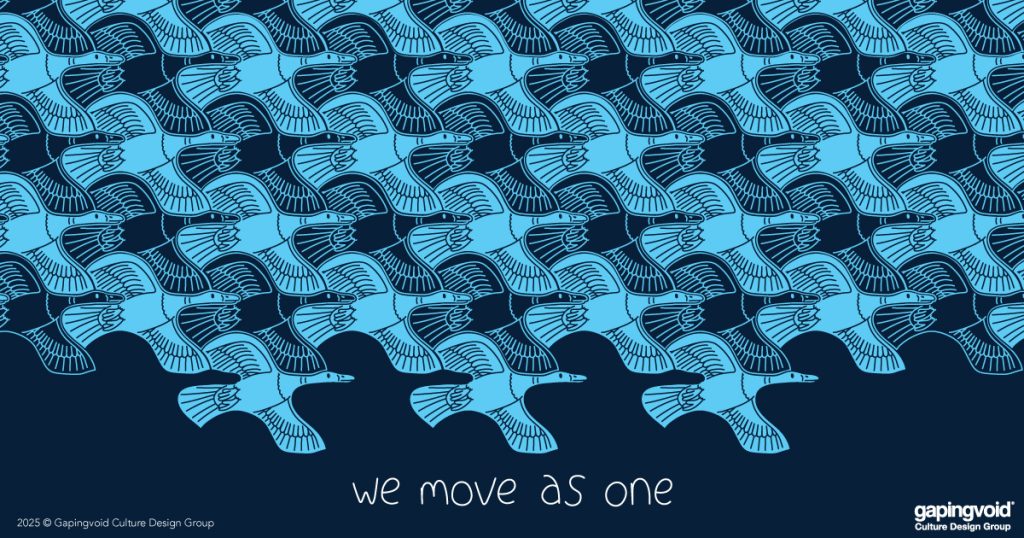
The magical, synchronized movement of a flock of starlings isn’t the product of any one bird; it’s the murmuration produced when the birds come together.
The moving melody of Beethoven’s Moonlight Sonata isn’t one note or even the whole collection of notes – it’s how those notes are structured and interact.
Or the internet. It’s not just getting the hardware right. It’s the result of writing the rules for how the pieces interact. Those rules are the “AND.”
None work solely because of the pieces. They work because of the spaces between the pieces. The “AND.”
We see this in the professional world too.
Company A has an entrepreneurial, risk-embracing culture. They “move fast and break things.” Company B has the opposite: a bureaucratic, risk-fearing culture. They “go slow and stay safe.”
They merge.
What happens next isn’t addition. It’s not even multiplication. It’s the alchemy around the “and.”
Any good chef will tell you, the dish isn’t just the ingredients. It’s how you mix them.
The “AND” is everything. It’s the frame. The shared understanding that guides how the pieces interact.
When people sync their brainwaves in conversation, it’s because there’s an understanding of the shared rules of engagement.
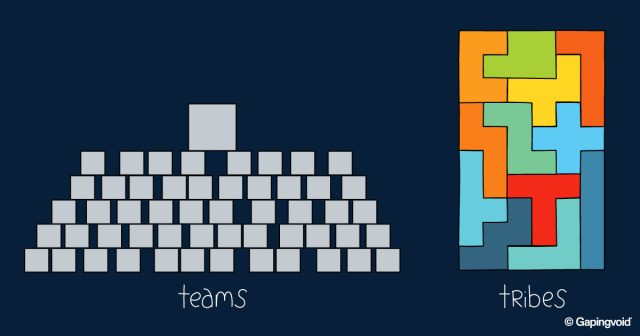
When individuals form groups and groups become cultures, the same principle applies: the collective is what it is because of the rules that define how the parts interact.
If you’re building a team. A culture. You’re not collecting talented people.
You’re writing the rules for how they dance together.
In “The Right Call,” Sally Jenkins tells the story of Steve Kerr before his first Warrior’s season. In a meeting with Pete Carroll, he asks him: “How are you going to coach your team?” Kerr started talking offense. Carroll stopped him. “That stuff doesn’t matter. Who are you? What are your uncompromising principles?”
NBA players are all talented. It’s how the coach brings them together that determines success.
The culture is the “and” and the “and” is everything.
The question isn’t who’s in your flock.
It’s what’s making them fly as one?