Jul 1, 2026
How To Win The Blame Game
Legend has it, it was once commonplace for American poker players to use buckhorn-handled knives to keep track of whose turn it was to deal the cards.
If you didn’t want to deal, you could flip the knife to the next person.
You could literally “pass the buck” to pass the responsibility.
On President Harry Truman’s desk in the Oval Office, there was a small sign that read “The Buck Stops Here!” Meaning he was accountable and responsible for every action, decision, and outcome of his administration.
Refreshing, isn’t it?
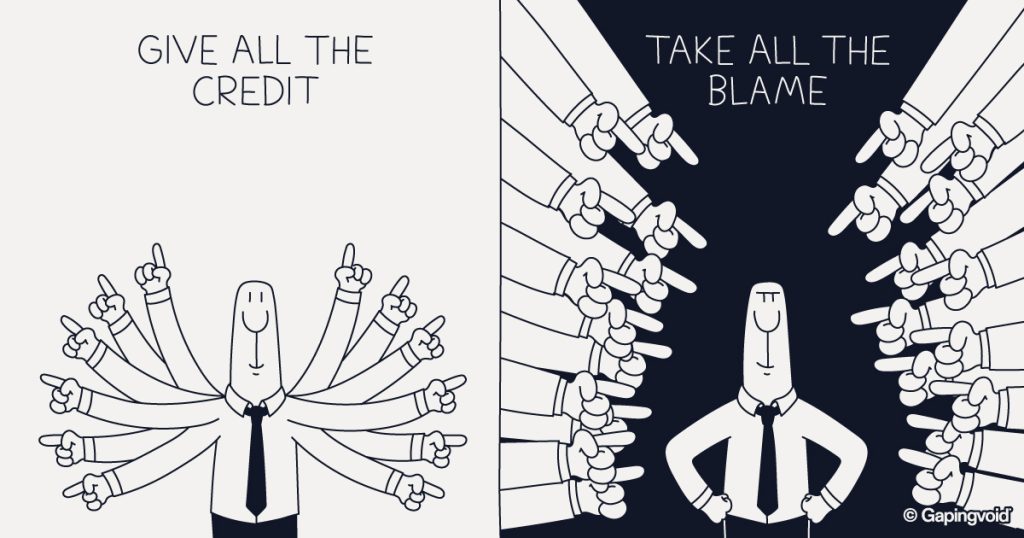
You’ve probably noticed that the modern world is suffering from a bit of an accountability vacuum. People crave credit and flee blame like it’s the bubonic plague.
To some extent, this is understandable. It’s how we evolved. Accepting blame 200,000 years ago could have meant expulsion from the tribe, and likely, death.
Studies prove that we’re biased to credit our successes to our character and our failures to circumstances, chance, other people, random happenstance.
We’re not quite so generous with other people: additional studies prove that we’re quick to blame others’ failures directly on their character.
Lenient with ourselves, harsh with others. How convenient.
These are standard human reactions – built-in biases. Normal? Yes. Productive? Almost never.
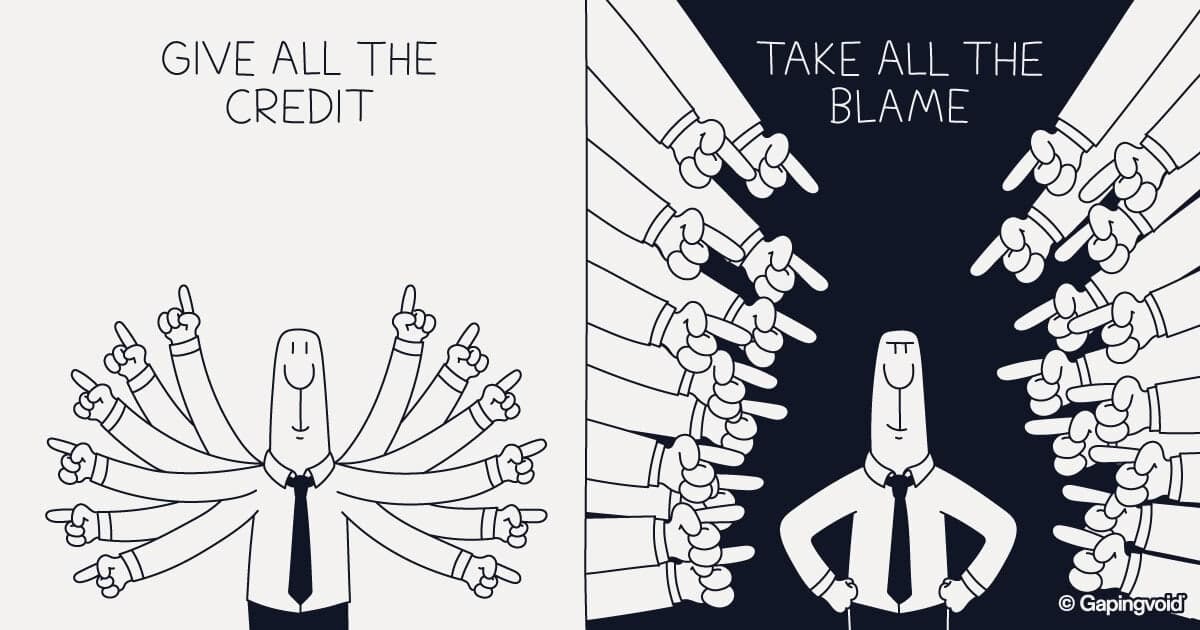
Good leaders resist their own wiring. They don’t resist responsibility; they embrace it.
They adopt what Navy SEAL and bestselling author Jocko Willink calls extreme ownership: taking responsibility for every single outcome on their teams.
Take Eisenhower as an example:
It’s the eve of the D-Day invasion. The weather on the English Channel is dicey. If General Eisenhower waits too long, the invasion force might get spotted by the defenders. If he sends them at the wrong time, stormy weather might sink the fleet.
After he made the call to send over the invasion force, he scrawled a brief message to send out in case the invasion failed:
“Our landings in the Cherbourg-Havre area have failed to gain a satisfactory foothold and I have withdrawn the troops. My decision to attack at this time and place was based upon the best information available. The troops, the air and the Navy did all that bravery and devotion to duty could do. If any blame or fault attaches to the attempt, it is mine alone.”
“My decision”… not “decisions that were made.”
Apparently there was a long, bold underline beneath “mine alone.”
Most people choose to pass the buck.
The ones who don’t? The ones who take extreme ownership even if it makes them look bad?
Those are the leaders people will dutifully follow into battle.