Aug 2, 2009
how blogging really works: random acts of traction
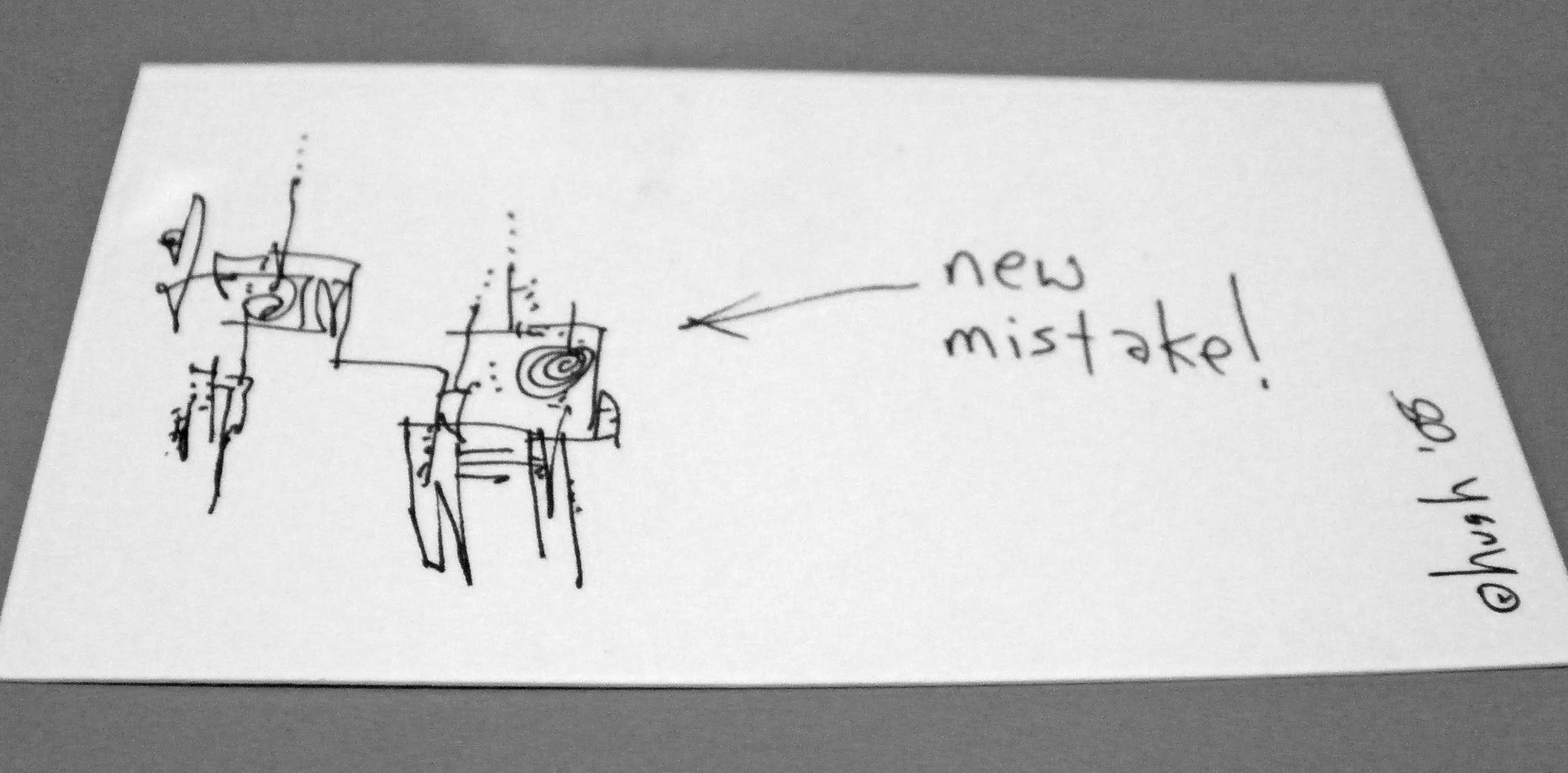
[The cartoon I gave to Ester Dyson back in 2008.]
“Random Acts of Traction”.
This is a phrase I use a lot these days.
It seems to be the story of my life.
I put stuff out there- cartoons, prints, a book, a blog post, whatever. Some of it flies, some of it goes nowhere.
Eight years of pretty successful blogging later, and I STILL have no way of predicting what will work, and what will fail.
Who knew the book would be a bestseller? Who knew the phrase, “Social Object” would enter the lexicon of mainstream marketing, simply by me rabbiting on about it ad nauseam? Who knew “Wolf vs Sheep” would be my most popular-selling print? Who knew the Blue Monster would spread like wildfire through Microsoft? Who knew all these things would gain “Random Acts of Traction”?
Not I, that’s for sure.
The great Doc Searls described this phenomenon much better than I ever could:
Tell ya what. I’m fifty-seven years old, and I’ve been pushing large rocks for short distances up a lot of hills, for a long time. Now, with blogging, I get to roll snowballs down hills. Some don’t go very far. But some get pretty big once they start rolling.
See, each snowball grows as others link to the original idea, and add their own thoughts and ideas. By the time the snowball gets big enough to have some impact, it really isn’t my idea any more.
Anyway, at this point in my life I’d rather roll snowballs than push rocks.
I think anyone who makes their living even partly via blogs and social media will understand the snowball metaphor, will understand “Random Acts of Traction”.
My friends, Dennis Howlett and James Governor, both technology consultants, certainly understand this. As they can only realistically execute on 10% of their ideas, they don’t seem to mind giving away the remaining 90% for free, via their blogs. If one of their free ideas gets “Random Acts of Traction”, it’s great PR for their businesses. It leads to conversations eventually. Conversations that eventually lead to paid gigs.
This only works, of course, if you can make your “snowballs” quickly and inexpensively enough. If you spend too much time worrying about it, you lose. If you try to control where the snowballs go after you’ve released them down the hill, you lose.
“Fail cheap. Fail fast. Fail often. Always make new mistakes.” –Esther Dyson. Words to live by. Exactly.
[Update: Just added this blog post to EVIL PLANS.]
[Backstory: About Hugh. Twitter. Newsletter. Book.. Interview One. Interview Two. Limited Edition Prints. Private Commissions. Cube Grenades.]