You know that story your best friend loves to tell about how he met his wife? He missed his flight by 20 seconds, ended up nursing a beer at the terminal bar, and struck up a conversation with the woman on the next stool. That conversation led to emails, then a date in Chicago, then three kids and a house in the suburbs.
Funny how it works. Turns out global commerce started much the same way.
In the winter of 1948, Joseph Woodland was sitting on a beach in Miami, thinking about Morse code he’d learned in Boy Scouts. He dragged his fingers through the sand. Dots became thin lines, dashes became thick ones. In that moment, he realized: these patterns could encode information.
He filed a patent in 1949. But there was no technology that could read the lines. So the patent sat. Then expired.
It took twenty years for laser scanners to develop that could read the patterns. Another few years for microprocessors that could decode the data fast enough. And an IBM engineer named George Laurer to redesign Woodland’s circular pattern into the rectangular stripes we know today.
On June 26, 1974, more than twenty-five years after Woodland’s moment on the beach, a cashier in Troy, Ohio scanned the first product with a barcode. A pack of Wrigley’s gum.
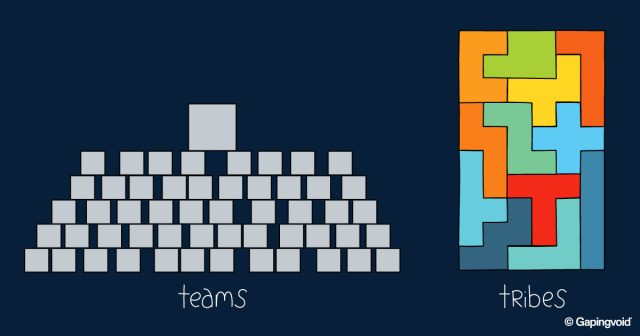
The barcode wasn’t a single invention. It was an assembly: sand doodles from 1948, laser technology from the 1960s, microprocessors from the 1970s, and a last-minute redesign that made printing reliable. Decades of unrelated breakthroughs finally clicking into place.
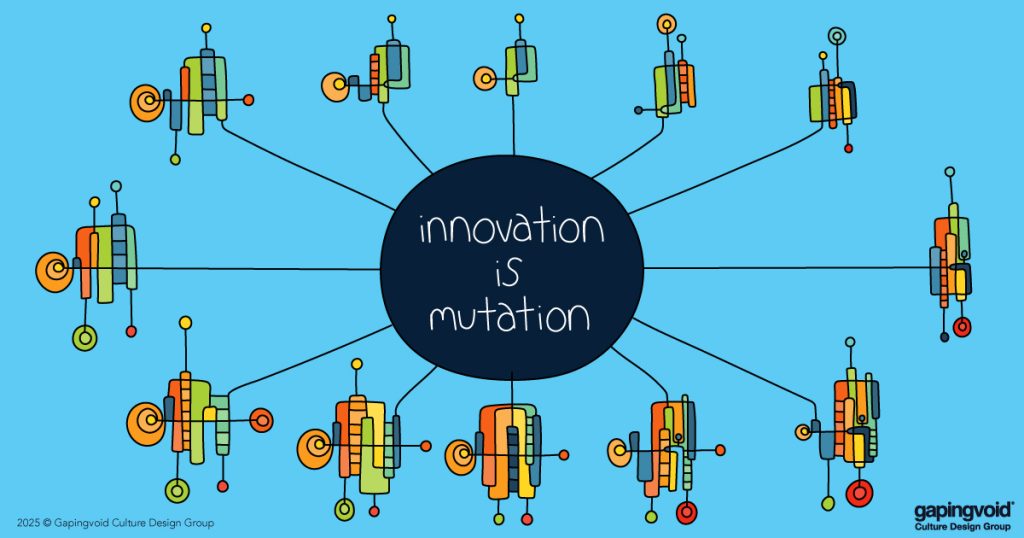
This is the hidden pattern of progress. Innovation doesn’t spring from nothing, it compounds. One breakthrough unlocks the next.
The DoD builds GPS. Smartphones emerge. Someone combines them. Suddenly Uber, Lyft, and DoorDash exist.
DARPA builds ARPANET. Someone figures out how to send messages across it. Layer after layer gets added over decades. Eventually, it becomes the internet.
The pieces are almost always there, waiting. The breakthrough is seeing how they fit together.
We thought of this when hearing the news that Target just announced a purchasing option directly inside ChatGPT. Shoppers can browse, build baskets, check out, all without leaving the conversation. Will it work? We’ll see. Luggage didn’t have wheels until 1970. Now coolers do.
Aretha Franklin put it perfectly: “Overnight success takes fifteen years.”