After World War II, a German officer reportedly said, the American Army succeeds in war because “war is chaos, and the American Army practices chaos on a daily basis.”
He was wrong about the chaos part.
Case in point: D-Day.
At Utah and Omaha beaches, as bullets were flying and bombs bursting, rigid lines of hierarchy and command partially disappeared.
Units got mixed up. Officers got hurt or killed. It was hard to tell who was who.
So, instead of looking to a fixed managerial hierarchy, soldiers dynamically steered.
Low-ranking troops took charge where they could. Makeshift units formed. People moved based on what needed doing, not what their job description said or the divisional hierarchy.
The German officer called it chaos.
It was culture.
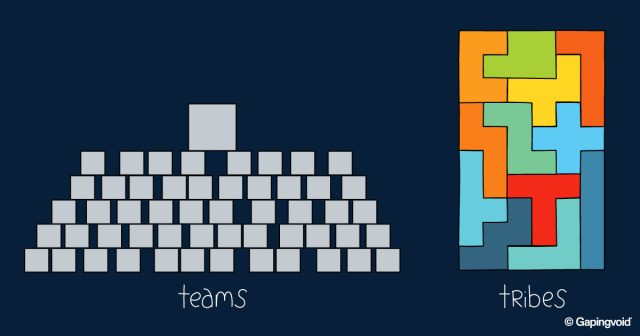
A recent study of 1.5 million employee reviews found that strong hierarchy and strong culture are inversely related. The more layers of management, the weaker the culture. The stronger the culture, the less hierarchy you need.
Strong culture (positive or negative) makes hierarchy obsolete.
Instead of a manager’s memo telling people how to operate, the norms do. Instead of rigid job descriptions and reporting lines organizing workflows, people find their contribution without being told where to stand.
According to legendary World War II historian Stephen E. Ambrose (of Band of Brothers fame), this is exactly what made the dynamism on D-Day possible: the culture of the United States Military.
He argued, this was not so for the far more hierarchical and rigid German Wehrmacht.
On D-Day, entire tank divisions sat idle because only Hitler could authorize their deployment. Hitler was asleep. Nobody dared to wake him.
Meanwhile, on the beaches, American privates were making command decisions.
That’s not chaos. That’s what happens when people know what matters and have permission to act on it.
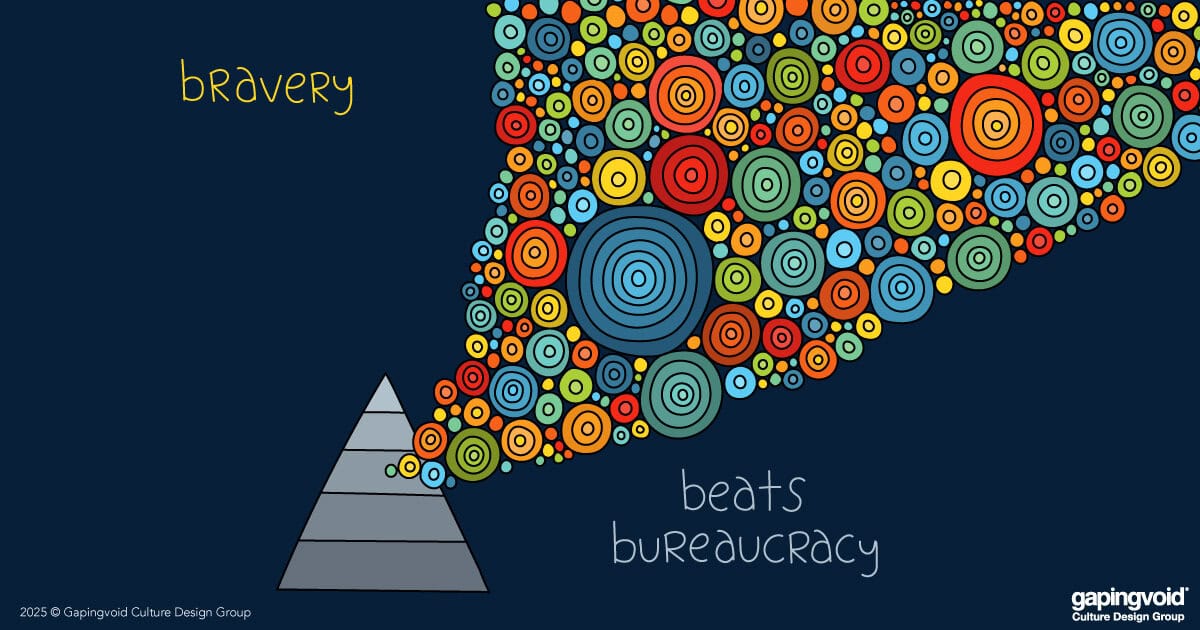
Last week, Secretary of War, Pete Hegseth, announced the Pentagon is ditching “bureaucracy and risk aversion” for “agility, innovation, and results.” His words: this requires “massive culture change.”
He’s right.
A rigid hierarchy can’t keep up with reality. Bureaucracy can’t leverage human capability. A chain of command can’t function when the chain breaks.
Culture can.
Your operating model gets built in peacetime. Your culture gets tested when it breaks.
To everyone who serves and proves what ours is made of, thank you. Happy Veterans Day.