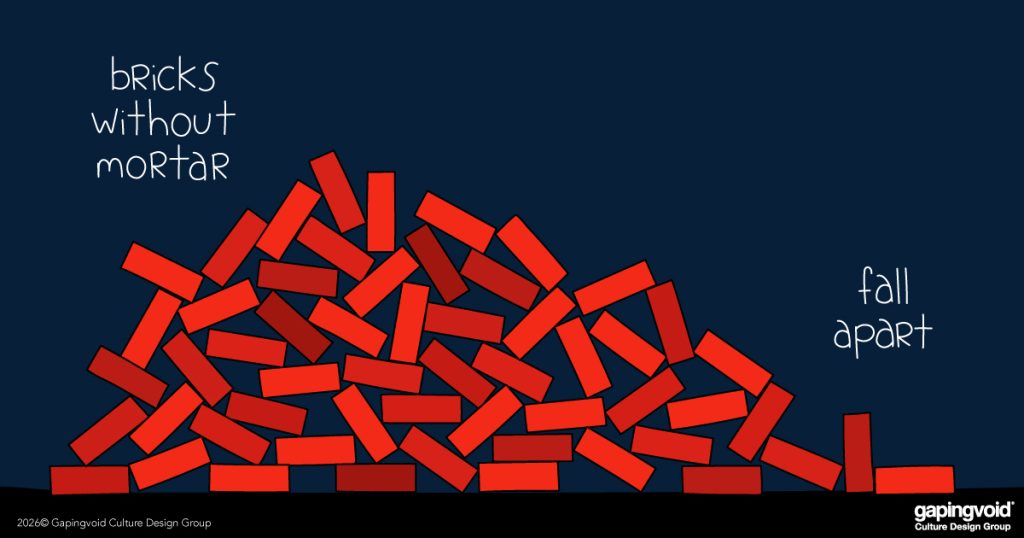
Our cultural fabric is unraveling before our very eyes. The question is: what is it that keeps a culture together in the first place?
Strong cultures align around core beliefs, principles, and priorities. These act like a constellation of North Stars, helping the members of the culture navigate reality in a unified, cohesive way. This is true of companies and countries.
When everyone is committed to moving in the same direction, we soar toward it. Consider the United State’s incredible industrial output during World War II. In our fight against a common enemy, the country found a common purpose. Things moved. Factories churned out tanks, planes, and ammunition faster than ever before. Or think about how much easier it is for a US President (Democrat or Republican) to advance their agenda when the country stands behind them.
Without shared North Stars, we get caught in a multidirectional tug of war.
The decline of shared values is (and always has been) a sign of civilizational decline. It marks the degradation of our societal Operating System. Not laws, but norms, behaviors, and beliefs. The founding fathers knew this. As John Adams said, “Our constitution was made only for a moral and religious people. It is wholly inadequate to the government of any other.” Or as the History YouTuber, Rudyard Lynch likes to say, religion is the OS of a civilization, an all its most important values tend to be embedded in it eventually.
And according to The Wall Street Journal, that O.S. is slipping away. In 1998, 70% of people deemed patriotism to be very important to them. Now, it’s 38%. Religion saw a similar decline, from 62% to 38%. Community involvement fell most sharply, down from a high of ~60% in 2019 to 25% now.
Like we said, it’s fraying.
But there’s a silver lining here, especially for thoughtful, human-centered businesses. As the norms and North Stars that once guided our culture fall away, there’s a vacuum in many people’s lives. A well-designed organizational culture, that offers people meaning, purpose, and connection, can help fill it.
The demand is there. It always will be. People’s priorities may shift with time, but the need to have priorities never will. The companies that truly understand this won’t just win talent, they’ll become the institutions people actually believe in.