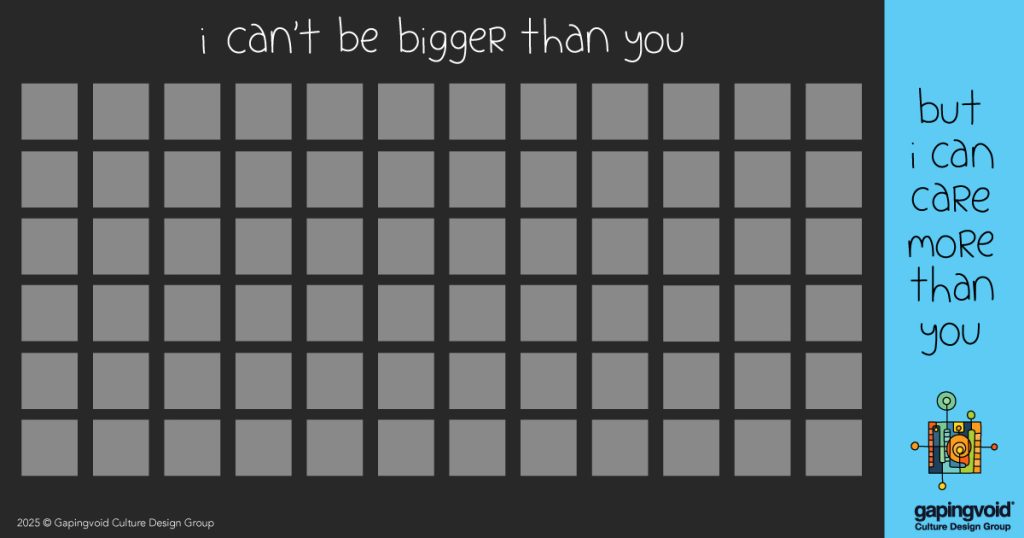
We live in an age of automation, globalization, and faceless systems. A world that often feels indifferent to the individual. In this vast machinery, care is often treated as a relic, a soft luxury in a hard-edged world. But care is what makes work matter. Without it, we’re just ghosts driving on auto-pilot.
The greatest philosopher of the 20th century, Martin Heidegger, called care the essence of being. In Being and Time, Heidegger claimed that to be human is to be involved, to be tethered to things by care. Care is the act of giving a damn.
For Heidegger, a hammer isn’t just a tool. It’s something we use, something we rely on, something we mend when broken.
But modernity strips this away. We don’t fix hammers anymore; we throw them out. We don’t know the hands that made our bread, the craftsman who stitched our shoes. The world becomes a blur of machine-manufactured, disposable objects, and, eventually, disposable people.
Heidegger warned that a future driven by technology and efficiency would lead us to live like uncaring automatons.
And yet there have been pioneers who cared a lot.
Consider Ettore Bugatti (1881-1947), the obsessive craftsman behind Bugatti cars. While Ford churned out Model Ts by the millions, Bugatti’s workshop was a temple of care. Each part was hand-finished, each engine tuned like a Stradivarius violin. He didn’t just build cars; he suffered over them and loved them.
That’s deep care: an unyielding refusal to accept mediocrity. His cars weren’t just faster; they were alive.
Today, pre-war Bugattis are among the most valuable and coveted cars in the world. A few have sold for over $35 million, and some are considered priceless.
In our air-conditioned, algorithm-driven work-world, the easiest thing is to turn off care and coast.
The modern world tells us to optimize, outsource, automate and use AI to do our work for us. We log on, zone out, and let the system decide.
But the danger isn’t just bad work, it’s what that indifference does to us. When we stop caring about what we make, we start rotting from the inside. We seek out distractions because care seems like a burden. We even avoid it. What if I was to take the risk and care about what I do for a living and it was to go wrong? We tell ourselves. Better not to care about the outcome at all and risk nothing.
But deep down we’re starving for something to matter.
The thing about care is that it compounds in ways that efficiency never will. Every Bugatti that changes hands for eight figures isn’t valuable because it was optimized. It’s valuable because someone refused to phone it in. That care is felt across a century.
Your work might not make you rich. Or famous. Or end up in a museum. But the person who encounters it will know if you cared or not. They always do.