For three decades, British traitor, Kim Philby, spied very successfully for the Soviet KGB from the very heart of MI6 British Intelligence, resulting in the deaths of hundreds, if not thousands of Western agents.
His motive? A mystery. He was from an upper class family, went to the best schools, excelled at Cambridge, ended up rising to the top of the then two most elite intelligence units in the world (for very different reasons), humiliated the most talented spy in the CIA , and was very popular wherever he went. To his bosses, his wife, his lovers and his best friend, he was an enigma. His KGB handler said:
“He never revealed his true self. Neither the British, nor the women he lived with, nor ourselves [the KGB] ever managed to pierce the armour of mystery that clad him … in the end, I suspect that Philby made a mockery of everyone, particularly ourselves.”
And this begs another question: what is it about spies that fascinate us so much? What is it about them that makes us want to read all the books, see all the movies and idolize James Bond?
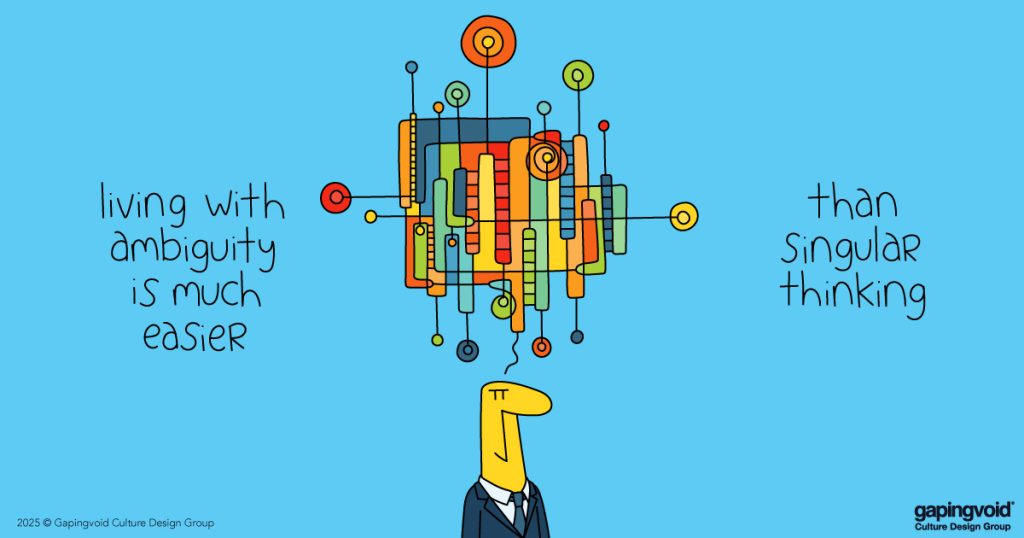
In a word, ambiguity.
To be a spy means to operate in the grey zone, the world of secrets, the world of not-knowing. Even when the consequences of being caught out for spying are so potentially dire (prison, torture, death, disgrace, etc).
One could easily argue that this ambiguity fascinates us, simply because most of us would crack like toothpicks within five minutes, yet Philby managed it for years.
But the truth is, to some extent, we all live double lives as well. Work self and home self. Office buddy on weekdays, fishing buddy on weekends. Wife, mother, businessperson. We have all these different selves competing for our attention. As we wrote in the past, we contain multitudes.
And yet, most people hate being bifurcated, hate uncertainty. Unlike Philby, most of us are incapable of being comfortable “not knowing.”
Not that we would use it for evil, but wouldn’t our careers be a whole lot easier if we were more comfortable with that? Not letting uncertainty slow us down? Not having to make sure all the boxes are ticked, all the data arranged in nice, pretty rows before proceeding?
Hence our endless fascination with him. Perhaps on some level, for all his horrendous crimes, we wouldn’t mind having a bit more of the Philby magic.
Because life is, as any 1970s French film director will tell you, inherently ambiguous. No leader of substance ever has or had the luxury of perfect information, instead they have to be able to operate in the grey zone (and convince one’s colleagues to live there as well).
We all want to find our own particular brand of greatness. The question isn’t ‘what do I know?’ It’s ‘what am I willing to do without knowing? Living in the grey zone (often for decades on end) is the price we all have to pay for that outcome.