Before modern plumbing, drinking from your local stream was a coin toss with cholera. So civilizations got creative.
The Germans brewed beer. The Vikings made mead. The Italians pressed wine.
And 4,800 years ago, the Chinese boiled leaves.
Tea had no booze. No hangovers. No bar fights. It worked.
Then the monks brought it to Japan.
The Silk Road carried it across Asia, especially to India.
Dutch and Portuguese traders brought it to Europe.
The British East India Company spread it everywhere else.
Along the way, from China to Japan, Britain to India, Morocco to Russia, every culture made tea their own. New ingredients. New rituals. New ceremonies.
And yet, tea remained just tea. Leaves plus hot water.
That simplicity was the magic. Simple enough for anyone to adopt, distinct enough for everyone to stamp with their identity.
That’s the formula for spreading ideas: the more ownership you share, the more powerful they become.
But we resist this. We’re intellectual hoarders by nature.
There’s a part of us that doesn’t want others to make our idea their own.
We’re not content to spread the big idea, we want to spread our big idea. We cling to ownership. We chase the glory.
It’s the program manager who resists smart modifications because each change makes the plan less “his.” The writer who rejects good edits because she’s losing control. John Hancock making his signature on the Declaration of Independence vastly bigger than everyone else’s. (Yes, seriously).
Great leaders resist that instinct.
They don’t hoard ownership, they give it away.
Because they know the size of the pie isn’t fixed, and they know that people spread ideas they feel ownership over.
The endowment effect: We value what we own.
The Ikea effect: We value what we helped build.
So the question becomes: Are you hoarding ownership?
Or are you inviting others to share it?
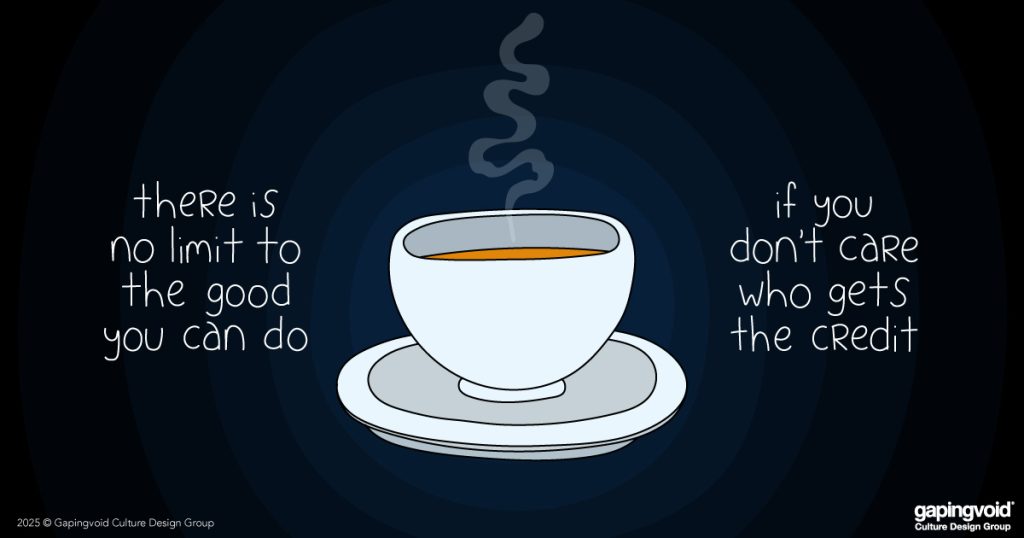
One path is about the credit. The other is about the impact.