You wrap up your tour of the Burj Khalifa and step out into the hot Dubai heat.
A supercar passes. License plate: “1.”
Just “1.”
You shrug. To you, it’s metal. Maybe a unique license plate.
To the driver, it’s $14 million dollars worth of metal.
In a city where Rolls Royces show up on every street corner and Rolexes are worn on every wrist, the status game has evolved.
It’s no longer played with supercars, it’s played with license plates.
“1” signals the highest status and fetches the highest price. “5” went for $7 million. “7” sold for about 10 times the car’s value.
And that’s the thing about the status game: The show must go on.
As Narnia author and renowned theologian, C.S. Lewis reflected on pride, it doesn’t come “out of having something, only out of having more of it than the next man…” The same goes for status.
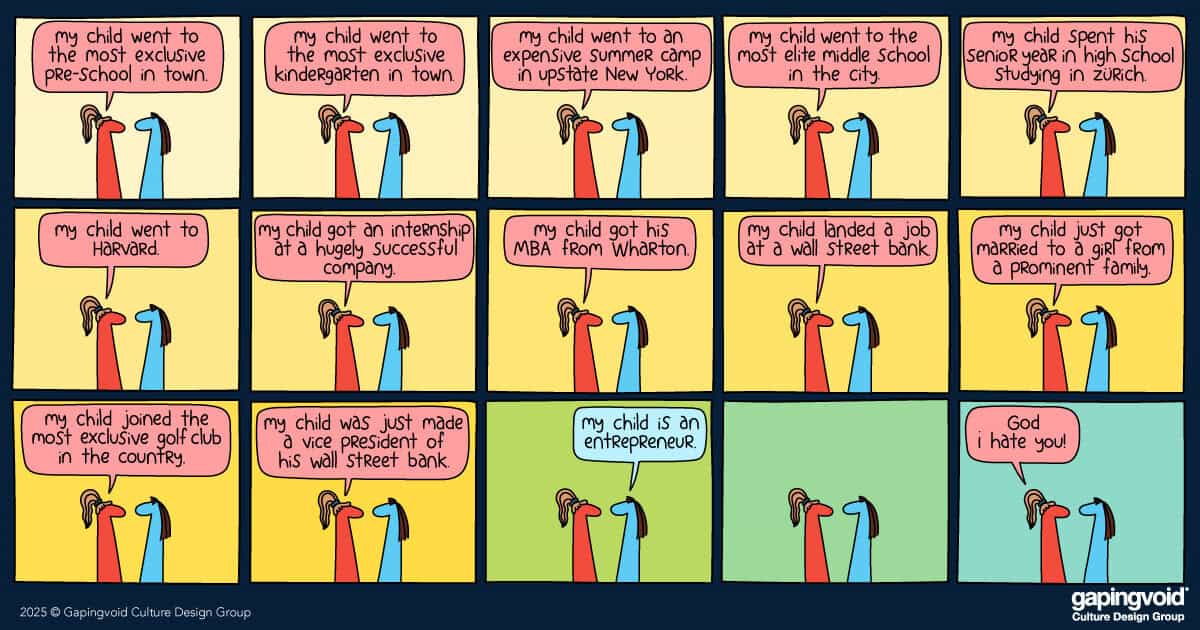
It’s not an infinite game, it’s a bottomless pit. Relentless. A temptation that offers us a choice every moment of every day:
Will we play the status game?
Or will we play the game of significance?
Status players chase trophies, victories, and glory. The artist makes art for the accolades. The executive toils for the corner office.
Significance players, on the other hand, chase the work itself. In this game, the athlete chases the ball for the love of the game. The 30,000 cheering fans? That’s immaterial. The artist makes art for the art. The executive works because she cares. About customers. About her team. About work worth doing.
The paradox? Status-seekers often burn out and lose their status. Significance-seekers often create work that lasts.
There’s a simple reason why. It’s exhausting to play a game that can’t be won. And it’s energizing to play a game where playing is winning.
To go back to C.S. Lewis: “Put first things first and we get second things thrown in: put second things first & we lose both first and second things.”
Our advice?
Chase significance first and let status sort itself out.
You might be pleasantly surprised.