There’s a painting in the Art Institute of Chicago that stops people cold. Van Gogh’s “Bedroom at Arles.”
It’s just a bedroom. A simple room with a bed, two chairs, a table. Nothing golden. Nothing mechanical. No roaring lions.
Compare that with the Byzantine Empire, which ruled from Constantinople as the bridge between Europe and Asia. Over the years, they perfected the art of imperial theater.
In their palace, they built mechanical wonders. A throne that could rise toward the ceiling, by some accounts golden trees with singing birds, mechanical lions beside the emperor.
Foreign ambassadors would enter expecting a typical throne room and instead witness the impossible. They’d return home with tales of Byzantine magnificence and glory.
Talk about signals sending a message.
For centuries, those signals prevented wars. They secured trade routes. They projected power that was very, very real. Because the Byzantines understood that perception shapes reality in geopolitics.
And yet, it failed in the end. Like the Wizard of Oz, they got increasingly good at looking powerful, while their actual military power withered on the vine.
The Byzantine Empire learned this difference between perception and reality the hard way when Constantinople was conquered by the Ottomans in 1453, putting an end to the former’s Empire.
Van Gogh’s bedroom sends a different signal.
He painted a bedroom. Just a bedroom. But embedded in it was a story that made us feel something. The tragic artist who saw swirling galaxies in starry nights, who found infinity in sunflowers, who painted beauty while battling demons that would eventually win.
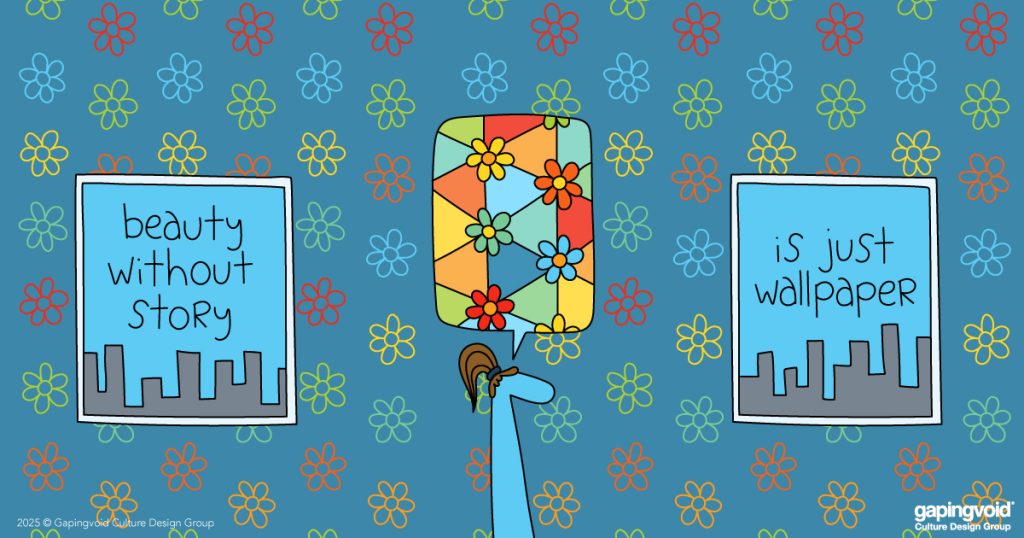
Take away Van Gogh’s story, and it’s just a pleasant interior. Nice colors. Good composition. Wallpaper. But that’s all it is.
Beauty without story is just wallpaper.
Today’s Byzantine thrones are everywhere. The tech company’s glass palace while everyone works from home. The restaurant’s gold-leaf steak that looks better on Instagram than it tastes. The consulting firms promise of “transformation” while delivering the same templates they’ve used since 2015.
These aren’t signals gone wrong. They’re broken promises.
When Patagonia repairs your jacket for free, they’re demonstrating what they believe about consumption. When a restaurant builds with an open kitchen, they’re making a promise about what they’re not hiding.
Real power comes not from not signaling, but eliminating the gap between what you signal and what you are.
That’s the difference between wallpaper and a window into the human soul.
Van Gogh’s bedroom still moves us because the images painted was backed up by the truth of his work and the life that backed it up.
We could use more bedrooms like that.
Even if your hands shake while you paint it.
Especially then.